

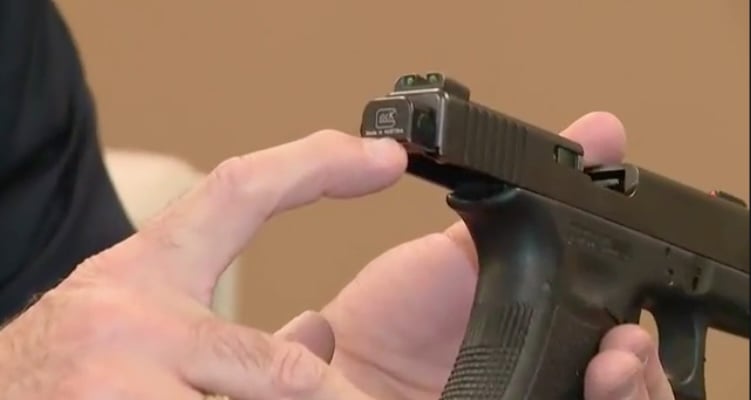
The Crime Prevention Research Center’s exhaustive but admittedly incomplete search for Glock-style pistols fitted with illegal auto-sears that were actually used in murders reveals something the media rarely admits: these so-called “Glock switches” remain statistical outliers even in America’s most violent cities. While any preventable tragedy deserves scrutiny, the data suggest that the overwhelming majority of gun homicides continue to be committed with conventional semi-automatic handguns and long guns that require no illegal modification. That reality undercuts the reflexive push for new restrictions on an entire class of firearms when the real enforcement failure lies with prosecuting the tiny fraction of criminals who already ignore existing federal law against manufacturing or possessing machine-gun conversion devices.
For the 2A community the takeaway is straightforward: every high-profile case involving a switch becomes fresh ammunition for legislation that would further burden the 99.9 % of owners who never convert their pistols. Lawmakers and legacy outlets rarely distinguish between the law-abiding shooter who keeps a stock Glock in the nightstand and the gang member who files down a lightning link in a back alley; instead they treat the hardware itself as the problem. The CPRC’s difficulty locating verified murder cases should therefore serve as both reassurance and warning—reassurance that the typical defensive or sporting Glock is not a machine pistol in disguise, and warning that isolated incidents will still be leveraged to expand the regulatory dragnet unless gun owners actively highlight the enforcement gap rather than the hardware gap.
Ultimately, the rarity of these conversions reinforces a core principle: criminals, not cornered sportsmen or single mothers, are the ones willing to risk a decade in federal prison for a prohibited machine gun. Strengthening prosecutions for straw purchases, prohibited-person possession, and the manufacture of conversion devices would deliver far more public-safety return than another round of cosmetic or feature-based restrictions aimed at the compliant. The 2A community’s task is to keep repeating that distinction until policy debates focus on the behavior of violent recidivists instead of the lawful accessories sitting in millions of gun safes.


