

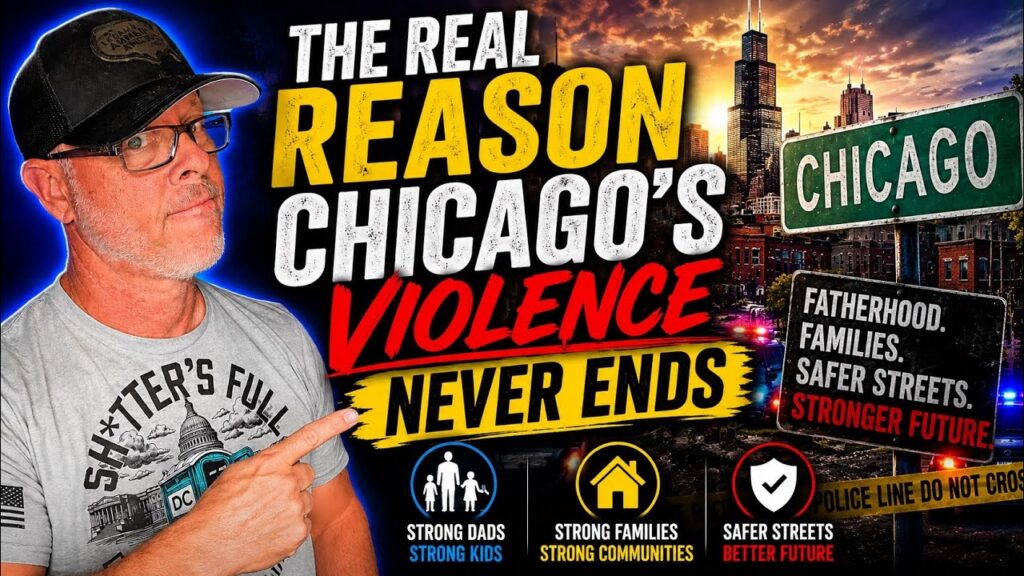
Overview
A weekend marked by both Juneteenth celebrations and Father’s Day saw renewed attention on gun violence in Chicago after multiple shootings left more than a dozen people injured. Surveillance footage from the city’s south side captured a red SUV pulling up to a gathering before gunfire erupted, prompting familiar arguments about the root causes of urban crime.
Pros
- Highlights statistical links between father-absent homes and higher rates of violent crime, citing data that violent crime is 226% higher and homicides 436% higher in affected Chicago neighborhoods.
- Emphasizes personal responsibility and community leadership, urging men to serve as engaged fathers and role models.
- Notes that existing gun restrictions have not curbed illegal firearm use, pointing out that lawbreakers obtain weapons through theft rather than legal channels.
Cons
- Frames the issue almost exclusively around family structure, potentially underplaying the roles of poverty, systemic inequality, and access to firearms.
- Offers limited discussion of policy solutions beyond rejecting expanded welfare programs and current gun-control measures.
- Characterizes political responses as “theater,” which may discourage nuanced debate on multifaceted urban-safety strategies.
Specs
- Chicago already maintains some of the nation’s strictest gun regulations, yet offenders continue to obtain firearms illegally.
- National data cited: 85% of prison inmates come from fatherless homes; boys without fathers are significantly more likely to join gangs, drop out of school, and commit violence.
- Estimated overlap of engaged fathers who actively celebrate Juneteenth: roughly 2–5% of American men.
“The biggest driver of this endless cycle of young men turning to violence is fatherlessness,” the host stated. “Strong fathers create strong sons and daughters. Strong families create safer streets.”


