

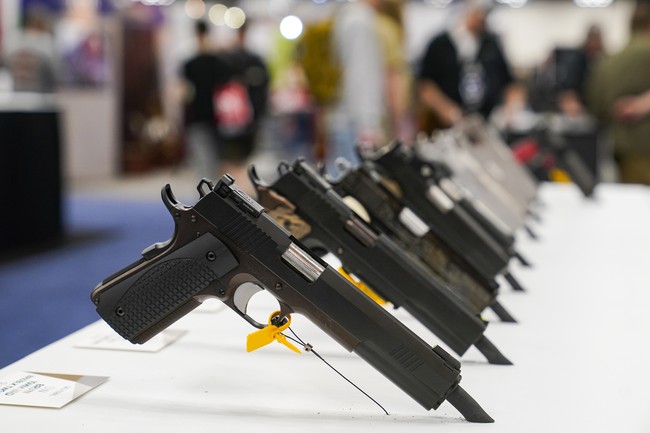
California’s latest gun-control failure isn’t just another headline—it’s a textbook case of how “universal” background checks and red-flag laws still leave the most dangerous people armed while disarming the law-abiding. The suspect in question had a documented history of violent threats, yet the state’s vaunted screening apparatus never flagged him for a firearms-prohibition order. That’s not an enforcement glitch; it’s the predictable outcome of a system that trusts paperwork more than people and assumes criminals will dutifully fill out Form 4473s. Meanwhile, millions of Californians who have never harmed anyone now face magazine bans, “assault weapon” registration schemes, and carry-permit waiting lists measured in years.
For the 2A community, the takeaway is brutally simple: every new restriction is sold as a surgical tool to disarm predators, yet the blade always seems to land on the wrists of the compliant. When the next tragedy occurs, Sacramento will reflexively demand still-tighter rules—more serial-number micro-stamping, more ammunition registries, more “ghost gun” bans—none of which would have touched the individual already ignored by existing law. The cycle protects political narratives, not neighborhoods.
The deeper implication is philosophical. A right exercised only after government pre-approval is no longer a right; it’s a privilege revocable by the same bureaucracy that just proved it cannot identify genuine threats. California’s experiment keeps demonstrating that the safest communities are those where peaceable citizens retain the means and the legal space to defend themselves, not those that pile ever-higher procedural hurdles between good people and the tools of self-preservation.


