

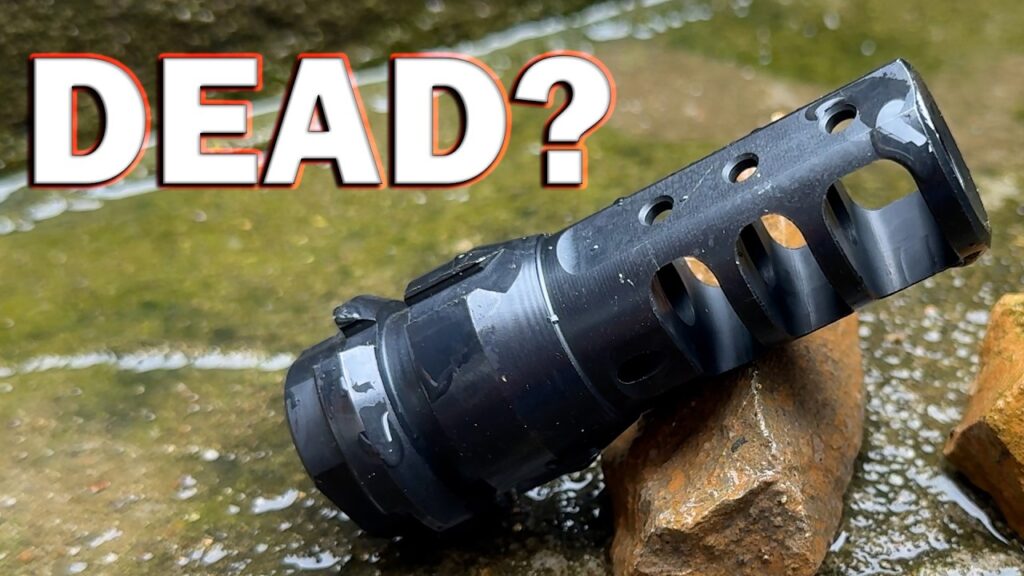
The suppressor tax stamp repeal has done more than just save shooters $200—it’s quietly rewriting the hierarchy of recoil management. Where muzzle brakes once ruled the range for their ability to tame heavy-recoiling rifles, the sudden affordability of hearing-safe suppression has shifted priorities toward devices that reduce both blast and signature. The old trade-off—brakes deliver brutal side-blast and concussion in exchange for flat shooting—is now weighed against a suppressor that tames recoil modestly while eliminating the need for ear pro and cutting visible flash. In practical terms, the brake’s dominance is eroding fastest in the very categories where it once seemed unbeatable: precision rifle, defensive carbine, and even some competition circuits that are adopting suppression-friendly rules.
For the 2A community this isn’t merely an equipment swap; it’s a cultural inflection point. Brakes turned every range into a punishing environment for bystanders, reinforcing the stereotype of “boomers with brakes” and giving anti-gunners ammunition about “dangerous noise levels.” Suppressors, by contrast, align with mainstream safety arguments and quietly normalize the idea that gun owners are responsible stewards of sound. The result is a slow migration of dollars and shelf space away from pure muzzle brakes toward hybrid devices—brake-suppressor mounts, user-serviceable modular cans, and low-back-pressure designs that preserve gas-gun reliability. Manufacturers who double-down on brake-only SKUs may find their market shrinking to niche competition corners, while those investing in next-gen suppression stand to capture a broader, more sustainable customer base.
Politically, the tax-free suppressor moment also hands advocates a tangible win they can point to when arguing for further Hearing Protection Act refinements or suppressor deregulation at the state level. If the public experiences modern cans as the new normal rather than exotic hardware, future incremental reforms become easier to defend. In short, the suppressor revolution hasn’t just outgunned the muzzle brake on the bench—it’s reshaping the narrative around what a “standard” firearm should look and sound like, and that shift may prove more enduring than any single product category.


