

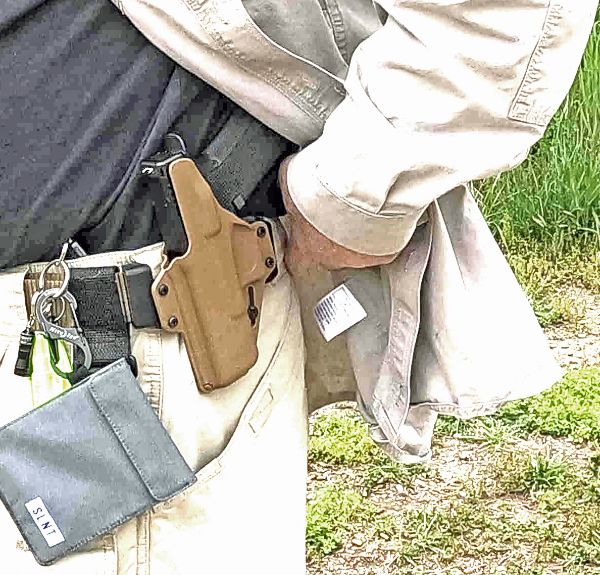
The story of a left-handed shooter being told their grip, stance, or even their very existence behind the trigger is somehow “wrong” cuts straight to the heart of why the Second Amendment belongs to individuals, not to bureaucrats or range-safety Karens with clipboards. Firearms are tools of self-determination, and the notion that one must conform to a factory-default right-handed world in order to exercise that right is both practically absurd and philosophically offensive. When instructors, manufacturers, or even fellow shooters treat left-handed operation as a defect rather than a design variable, they reveal an instinct to standardize the citizen rather than equip the citizen—an instinct fundamentally at odds with an amendment whose text recognizes no preferred handedness, only “the people.”
What makes the episode especially instructive for the 2A community is how quickly ergonomic friction can be weaponized into regulatory friction. If a generation of left-handed shooters internalizes the message that their hardware or technique is suspect, they become less likely to train, less likely to compete, and less likely to vote with their dollars for ambidextrous controls and truly neutral platforms. That chilling effect is small in any single case yet cumulative across millions of citizens whose dexterity does not match a 1950s rifle manual. The market has already answered with left-side charging handles, bilateral safeties, and modular ergonomics; the culture must now finish the job by treating handedness as a feature set, not a compliance problem.
Ultimately, the “wrong-handed” episode is a reminder that the right to keep and bear arms is exercised one trigger finger at a time—left or right—and that any orthodoxy demanding conformity before competence is an orthodoxy the Second Amendment was written to defy.


