

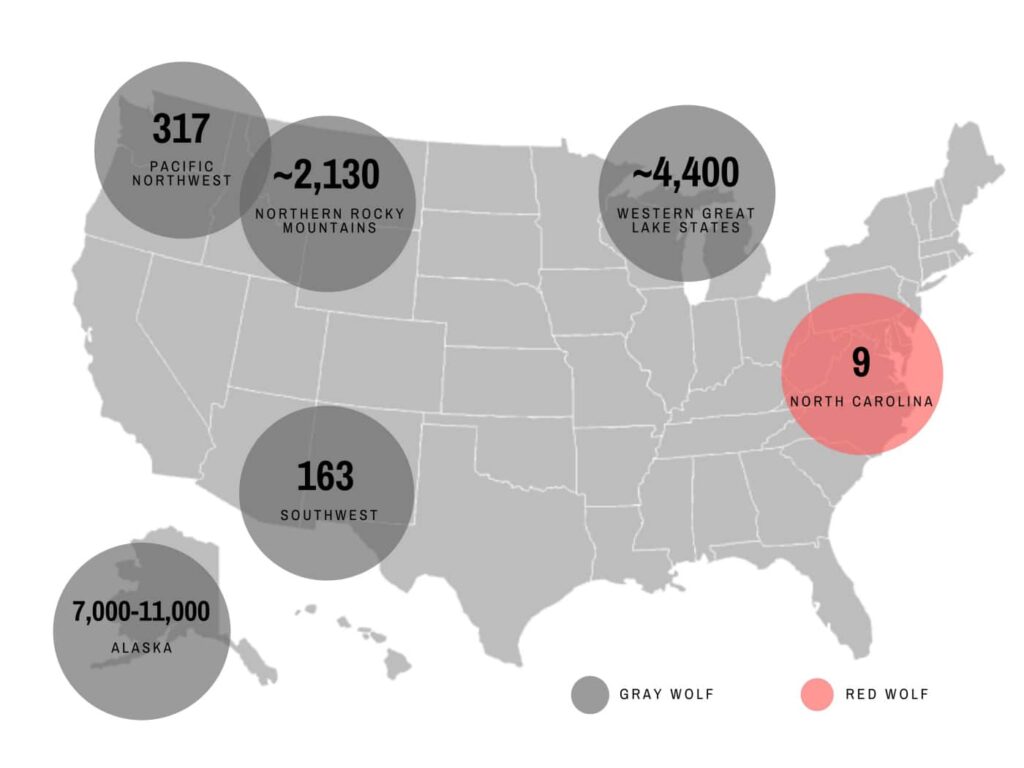
The Wolf Conservation Center’s latest report is a stark reminder that when government agencies and activist groups decide a species needs “protection,” the real-world consequences often fall hardest on the people who live closest to the land. Wolves have been restored to roughly two-thirds of their former global range, yet in the lower 48 they still roam only about ten percent of their historic territory. That gap isn’t an accident of biology; it’s the predictable result of top-down management that treats rural communities as obstacles rather than stakeholders. When federal recovery plans override state wildlife agencies and private landowners, the same pattern emerges that gun owners have seen for decades: distant regulators claim moral high ground while shifting every cost—livestock losses, reduced game populations, safety concerns—onto the very citizens who must coexist with the animals.
For the Second Amendment community, the lesson is straightforward. Just as an armed citizenry serves as a check against centralized power, sustainable wildlife policy depends on local control and individual accountability. Wolf reintroductions imposed by court order or federal fiat have repeatedly shown that blanket protection without concurrent authority to manage problem animals leads to backlash, poaching, and eroded trust in conservation itself. By contrast, states allowed to set science-based harvest quotas have maintained stable predator populations while protecting rural livelihoods. The same principle applies to self-defense: when law-abiding citizens retain both the tools and the legal space to protect themselves and their property, outcomes improve for everyone involved. Wolf policy and gun policy diverge only in the details; both ultimately test whether we trust free people to manage risk or prefer to outsource that judgment to bureaucrats far from the consequences.
The broader implication is that conservation, like constitutional rights, functions best when it is decentralized and adaptable. Habitat loss is real, but so is the loss of working landscapes when regulations make ranching, hunting, and rural living untenable. Encouraging voluntary conservation on private land, funding state wildlife agencies through hunting licenses and excise taxes, and preserving the ability of individuals to defend property—these approaches have rebuilt species such as wild turkeys and white-tailed deer without turning neighbors into adversaries. Wolves can recover too, but only if the framework respects the same principles that secure our right to keep and bear arms: local knowledge, personal responsibility, and a healthy skepticism toward one-size-fits-all edicts from Washington.


