

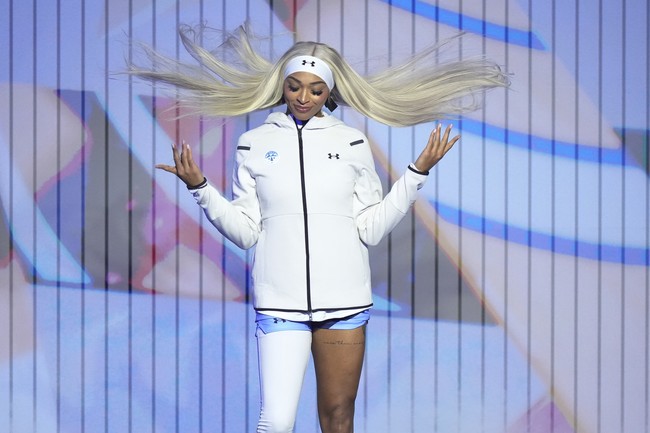
DiJonai Carrington’s clothesline on Sophie Cunningham wasn’t just a flagrant foul—it was the latest flare-up in a league that’s become a petri dish for identity politics. The ejection itself was straightforward: a textbook cheap shot that left Cunningham crumpled on the floor. What turned the moment into a culture-war sideshow was Carrington’s post-game pivot, first invoking “white privilege” to explain the scrutiny, then backpedaling into the familiar fog of “systemic” this-and-that. The flip-flop didn’t just expose the hollowness of the talking point; it underscored how quickly the narrative collapses when the optics refuse to cooperate.
For the 2A community, the episode is a reminder that the same rhetorical sleight-of-hand used to delegitimize self-defense rights is now bleeding into every arena where accountability is inconvenient. When a player can attempt to transmute a dirty play into a referendum on skin color, it mirrors the broader effort to paint lawful gun owners as inherently suspect while excusing actual violence in the name of equity. The Second Amendment exists precisely because history shows that rights are safest when they’re treated as individual and color-blind, not as bargaining chips in an ever-shifting grievance hierarchy.
The takeaway is simple: institutions that reward word-salad over objective standards eventually erode the very protections—speech, self-defense, due process—that keep civil society intact. Whether it’s a WNBA court or a congressional hearing, the pattern is the same: elevate identity, dilute responsibility, and watch the rule of law give way to narrative management. The 2A community’s job is to keep pointing out that the Bill of Rights was written in ink, not erasable marker.


