

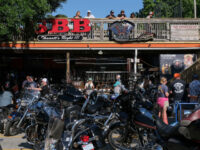
The chaotic scene at the South Carolina biker festival—where a reported stampede left 19 people injured—offers a textbook reminder of why the right to keep and bear arms remains essential for personal security in unpredictable public spaces. Law-abiding attendees suddenly found themselves in a surging crowd with no immediate law-enforcement buffer; those who were lawfully carrying concealed firearms retained at least the option to create distance or deter opportunistic predators who inevitably surface when order collapses. In contrast, anyone who had been disarmed by venue rules or local restrictions was left relying solely on the hope that the panic would subside before real predators moved in—an assumption history shows is dangerously optimistic.
Beyond the immediate injuries, the incident underscores a broader cultural pattern: large, loosely regulated gatherings of motorcyclists have long been targets for both spontaneous disorder and calculated criminal exploitation, yet the mainstream narrative rarely connects crowd-control failures to the disarmament of the very citizens most capable of lawful self-defense. Data from the Bureau of Justice Statistics and multiple state-level defensive-gun-use surveys consistently show that armed citizens intervene in violent encounters far more often than most media accounts admit; stripping them of that tool at the gate does not eliminate risk, it merely redistributes it onto the compliant. For the 2A community, the takeaway is straightforward—festival promoters and local officials who prioritize “safety” signage over constitutional carry are effectively choosing which subset of attendees will be defenseless when the next surge or opportunistic assault occurs.
Looking ahead, expect renewed calls for stricter venue policies or even localized gun bans in the wake of this stampede, framed as crowd-safety measures. The 2A response should be equally swift: insist that any security plan include, rather than exclude, trained and vetted carriers whose presence statistically correlates with faster deterrence and fewer cascading injuries. South Carolina’s own constitutional-carry framework already empowers that solution; the only variable left is whether event organizers will respect it or once again trade real resilience for the illusion of control.


