

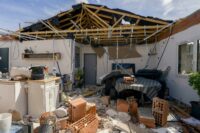
A tornado that tore through a French village this week left residents describing the scene as a “wartime situation,” with roofs ripped away, cars flipped, and power lines strewn like battlefield debris. While the storm itself was a meteorological event, the language used by locals is telling: when nature strips away the illusion of safety, people instinctively reach for the vocabulary of conflict. In the United States, that same instinct is why millions keep a firearm within reach—because the first moments after any disaster, man-made or natural, belong to whoever is already on the scene, not to distant authorities still navigating blocked roads.
The French response will likely be the familiar European script: more centralized planning, stricter building codes, and renewed calls to limit civilian access to tools that could “escalate” a crisis. Yet the footage of dazed families picking through rubble also underscores a quieter truth the 2A community has long understood—paper guarantees and emergency hotlines are only as good as the interval between the 911 call and the first responder’s arrival. In rural or suddenly isolated areas, that interval can stretch into hours. A lawfully armed citizen, by contrast, is already present, already equipped, and already trained to protect what remains when the grid goes dark.
For American gun owners watching the clip, the takeaway is less about France’s weather than about mindset. Disasters do not pause for permitting paperwork or wait for the sheriff to thread through debris. They reward preparation, self-reliance, and the sober recognition that civilization’s thin veneer can be stripped away in ninety seconds of wind. The Second Amendment exists precisely for those ninety seconds—and for every unpredictable minute that follows.


