

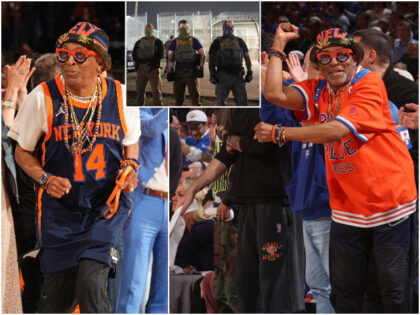
Spike Lee’s public call for ICE agents to steer clear of a potential Knicks championship parade isn’t just another celebrity soundbite—it’s a revealing snapshot of how cultural figures weaponize selective outrage while ignoring the very institutions that keep parades, arenas, and cities safe. By framing federal immigration enforcement as an unwelcome presence at a sporting event, Lee reinforces the narrative that law-enforcement visibility itself is the problem, a stance that conveniently sidesteps the fact that armed, trained professionals—many of them lawfully carrying under the protections the Second Amendment guarantees—are the reason large public gatherings don’t descend into chaos. For the 2A community, the subtext is clear: when prominent voices treat enforcement officers as pariahs, they erode the cultural legitimacy of armed self-defense and public-order roles that millions of citizens also exercise every day through concealed-carry and constitutional carry.
The deeper implication is the widening gap between elite coastal rhetoric and the lived experience of ordinary Americans who rely on both secure borders and the right to keep and bear arms. Spike Lee’s Knicks fandom gives him a platform, yet his warning effectively tells the same agencies tasked with intercepting transnational gangs and fentanyl pipelines to stand down during a moment of civic celebration. That message resonates far beyond immigration policy; it signals to the broader law-abiding gun-owning public that their presence at public events—whether as private citizens or off-duty officers—may soon be similarly stigmatized. In an era when soft-on-crime jurisdictions already strain police resources, diminishing the social status of enforcement personnel only increases the practical importance of an armed citizenry ready to fill the gap.
Ultimately, the episode underscores why consistent, unapologetic defense of the Second Amendment remains vital: cultural pressure campaigns rarely stop at one target. If ICE agents can be told to vanish from a parade route, the same logic can be—and has been—turned against concealed carriers, open carriers, and even trained security professionals at schools, churches, and workplaces. The Knicks may or may not hoist a trophy this June, but the underlying contest over who is allowed to provide security, who is celebrated for it, and who is shamed for it will continue long after the confetti settles.


