

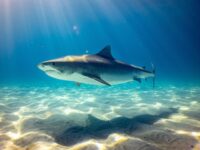
A shark attack on a naval base employee in Florida isn’t just another wildlife story—it’s a stark reminder that danger doesn’t always come with a warning label or a predictable pattern. The footage captures the raw speed and power of a predator that doesn’t care about jurisdiction, security clearances, or the fact that the victim was on what should have been “safe” government property. For the 2A community, the takeaway is immediate: when seconds count and the threat is already in motion, waiting for someone else to intervene is a losing strategy. Whether the attacker has fins or feet, the principle remains the same—prepared individuals who carry legally are the only reliable first responders in the moment.
The broader implication is that environments once considered low-risk are increasingly unpredictable. Military installations, coastal bases, and even everyday workplaces sit at the intersection of nature, policy, and human activity, yet none of those factors can guarantee safety. Gun owners who train for the worst-case scenario understand that layered preparedness—awareness, legal carry, and decisive action—matters more than the illusion of institutional protection. This incident reinforces why the right to keep and bear arms exists in the first place: it empowers citizens and service members alike to respond when the unexpected arrives faster than any policy memo or emergency protocol.
Ultimately, the story isn’t about sharks versus people; it’s about the mindset that refuses to outsource personal security to chance or bureaucracy. The 2A community has long argued that rights are exercised most clearly in moments when help is distant and the threat is immediate. A mauling on a naval base simply adds another data point to that argument, showing that preparedness isn’t paranoia—it’s the rational response to a world where predators, human or otherwise, don’t schedule their attacks.


