

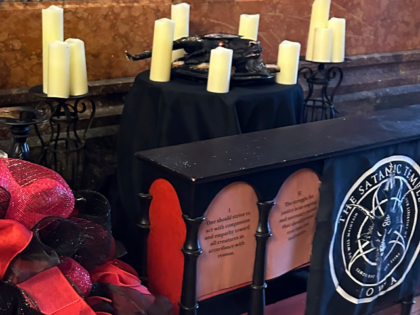
The Satanic Temple’s latest stunt—dragging the ACLU into a lawsuit because Iowa wouldn’t rubber-stamp a “family-friendly” holiday display in the Capitol rotunda—looks less like a fight for religious liberty and more like a calculated effort to normalize fringe ideology in taxpayer-funded spaces. By insisting that a self-described Satanic organization deserves equal footing with traditional Christmas trees and menorahs, the plaintiffs are testing how far the Establishment Clause can be stretched before it snaps. For Second Amendment supporters, the episode is a reminder that the same legal machinery being used to crowd out mainstream religious expression can just as easily be turned against the right to keep and bear arms; if a state can be forced to host an explicitly anti-religious display, it can also be pressured to treat the exercise of enumerated constitutional rights as optional privileges subject to bureaucratic veto.
The deeper implication is cultural, not merely legal. The Satanic Temple’s branding strategy hinges on portraying itself as a harmless foil to Christianity, yet its iconography and rhetoric are designed to provoke rather than accommodate. When that provocation is underwritten by the ACLU and litigated in federal court, the message to ordinary citizens is unmistakable: dissent from progressive orthodoxy will be pathologized, then litigated into submission. Gun owners have watched this script play out in sanctuary-city lawsuits, campus carry bans, and “sensitive place” expansions; each time, the argument is framed as compassion or safety until the courts redefine constitutional text to suit the prevailing cultural mood. Allowing quasi-religious activism to colonize public forums accelerates the same erosion of neutral principles that threatens the individual right to self-defense.
Ultimately, the Iowa case is less about holiday decorations than about who gets to define the public square. If the Satanic Temple prevails, the precedent will be wielded to demand that governments treat any self-declared belief system—however eccentric or hostile—as a co-equal with historic faiths. That outcome would further squeeze the civic space where traditional values, including the moral framework that underpins the Second Amendment, have long resided. For 2A advocates, the takeaway is straightforward: defending the right to arms requires defending the cultural preconditions that make that right intelligible in the first place.


