

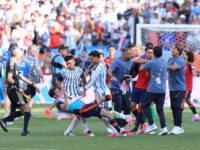
The footage of Argentina’s players and staff trading blows with their Spanish counterparts after a lopsided World Cup loss is more than just another ugly sports clip; it’s a textbook case of what happens when a nation’s cultural respect for order and self-defense collapses under pressure. Spain’s players, many of whom come from a country with some of Europe’s strictest gun-control laws, found themselves in a melee where fists and boots were the only tools available once tempers flared. In contrast, the Argentine side—representing a country whose citizens still remember the 2001 economic collapse and the street-level chaos that followed—seemed quicker to escalate to physical force, underscoring how societies that disarm their law-abiding citizens often leave them with nothing but their bodies when violence erupts.
For the 2A community the takeaway is immediate and practical: the same impulse that drives governments to confiscate firearms also breeds environments where ordinary people must rely on improvised weapons or sheer numbers once order breaks down. The brawl didn’t happen in a vacuum; it followed years of European gun restrictions that have left both athletes and fans without legal carry options even in high-profile international venues. Meanwhile, American shooters watching the video instinctively note how a single lawfully armed security detail or even a few permit holders in the stands could have changed the calculus from “pile-on” to “stand down.” The incident is a live-fire demonstration that rights without the means to enforce them are little more than polite suggestions.
Beyond the pitch, the footage should remind pro-2A advocates that cultural attitudes toward self-defense travel with teams and fans alike. When Spanish officials later blamed “excessive passion” rather than the absence of lawful defensive tools, they echoed the same talking points used by domestic gun-control groups after every riot or mass incident. The Argentine response—raw, physical, and ultimately self-defeating—illustrates why millions of Americans continue to reject the notion that the state can or should be the sole guarantor of personal safety. In short, the World Cup dust-up is a microcosm of the larger debate: societies that prize individual responsibility and the right to keep and bear arms tend to de-escalate faster; those that don’t often end up swinging first and asking questions later.


