

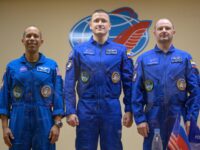
The safe return of the US-Russian crew after eight months aboard the International Space Station is more than a feel-good space story—it’s a reminder that even in an era of sanctions, supply-chain disruptions, and geopolitical friction, the machinery of cooperation still turns when the stakes are high enough. The Soyuz capsule’s flawless re-entry and the crew’s physical recovery protocols underscore a truth the firearms community has long understood: reliability under stress isn’t optional; it’s engineered. Every redundant system on that spacecraft—from the solid-fuel retro-rockets to the layered thermal shielding—exists because someone, somewhere, refused to accept single-point failure. That same mindset drives the 2A world’s insistence on quality components, proper maintenance, and the right to keep and bear the tools that guarantee personal security when institutions falter.
What’s often missed in the headlines is how the ISS itself functions as a floating testament to dual-use technology. The same materials-science advances that protect astronauts from micrometeoroids and orbital debris have quietly migrated into body-armor ceramics, high-pressure gas systems, and lightweight alloys now appearing in modern defensive firearms. Meanwhile, the crew’s eight-month isolation offers a real-world case study in the human factors that matter when supply lines stretch thin: training, redundancy, and the psychological edge that comes from knowing you control the means of your own survival. For Second Amendment advocates, that last point isn’t theoretical; it’s daily life in jurisdictions where law-abiding citizens must plan for the possibility that help may be minutes—or hours—away.
Finally, the seamless hand-off between American commercial crew vehicles and the venerable Russian Soyuz highlights a pragmatic truth: when politics cool, capability still counts. The 2A community has watched similar cycles play out domestically—periods of panic buying followed by quiet restocking, import restrictions followed by domestic innovation. The lesson is consistent: rights and the tools that secure them endure not because governments promise stability, but because individuals and private industry refuse to outsource their own security. As the astronauts step onto Kazakh soil and the ISS continues its next rotation, the takeaway for gun owners is clear—build what you can, maintain what you must, and never assume the next safe landing is guaranteed by anything other than preparation.


