

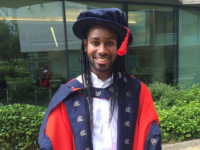
The suspension of the American academic who first flagged Jason Arday’s alleged plagiarism is more than an ivory-tower spat; it is a textbook case of institutional self-preservation colliding with the public’s right to know. Arday’s rapid ascent to Cambridge professorship was sold as proof that elite institutions could be both diverse and rigorous. When the whistle-blower produced side-by-side passages showing unattributed lifts from earlier scholars, the university’s first instinct was not to audit the record but to sideline the messenger. That reflex should alarm anyone who still believes academic credentials are earned, not allocated.
For the 2A community the lesson is straightforward: if universities will cancel dissenters over footnotes, they will happily cancel dissenters over firearms. The same administrative class that now polices citation style already polices “high-capacity magazines” on campus, “assault-weapon” nomenclature in lectures, and faculty who refuse to sign diversity statements that implicitly disparage armed self-defense. When truth-telling becomes a terminable offense, every data-driven argument—from defensive-gun-use studies to the historical pedigree of the Second Amendment—rests on increasingly shaky ground.
The deeper implication is that credentialism itself is being hollowed out. If Cambridge cannot or will not defend the integrity of its own research, then its imprimatur on policy questions—gun control, public health, climate regulation—loses presumptive authority. Law-abiding gun owners have long argued that expertise must be demonstrated, not merely declared. This episode supplies fresh evidence that the burden of proof now rests with the credentialed class, not with the citizen asked to surrender rights on its say-so.


