

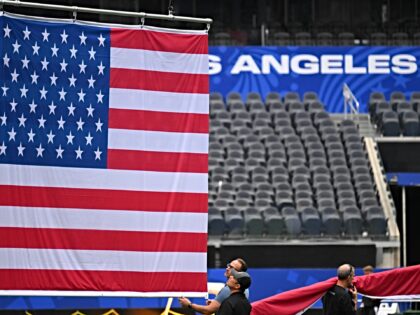
The U.S. men’s national soccer team’s opening World Cup match against Paraguay in Los Angeles is shaping up to be a textbook case of demand-side failure, with tickets still sitting on the secondary market days before kickoff. That’s telling in a country where soccer has spent decades trying to crack the mainstream, yet still can’t fill a stadium for what should be a signature moment. For the firearms community, the parallel is obvious: when a product or event fails to connect with the people it claims to serve, the problem isn’t solved by more marketing or government subsidies—it’s solved by listening to what actual customers want instead of what elites think they should want.
The same disconnect shows up in the gun-control debate every time another high-profile city tries to turn “public safety” into a spectator sport. Los Angeles, the very venue struggling to move World Cup seats, already operates under some of the strictest local gun laws in the country, yet the results are measured in empty rhetoric rather than empty crime statistics. Meanwhile, states that treat the Second Amendment as a feature rather than a bug continue to see both higher lawful carry rates and, in many cases, better public-safety outcomes. The lesson for 2A advocates is the same one the soccer ticket office is learning the hard way: you can’t mandate enthusiasm, and you can’t legislate away individual choice—whether that choice is buying a match ticket or exercising a constitutional right.
What this moment really underscores is that cultural buy-in matters more than top-down mandates. Soccer’s struggle in Los Angeles is a reminder that forcing an activity into the mainstream without organic demand produces empty seats; the same principle applies when politicians attempt to force law-abiding citizens out of their rights under the guise of collective security. The firearms community has spent years building parallel institutions—training networks, legal defense funds, state-level legislative wins—precisely because it understands that rights are preserved by participation, not by waiting for permission. If the World Cup can’t sell tickets in America’s second-largest city, maybe the real story isn’t about soccer at all; it’s about what happens when institutions ignore the actual preferences of the people they claim to represent.


