

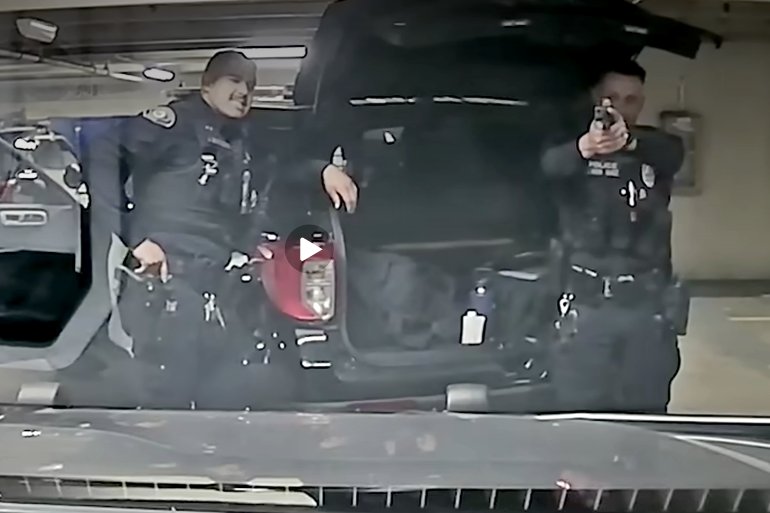
The Pasadena Police Department’s release of bodycam footage showing officers engaged in what they called “horseplay” with their service weapons is a textbook case of why the “qualified immunity plus qualified training” model keeps failing the public. One officer’s negligent discharge inside a station house wasn’t a harmless prank; it was the predictable result of a culture that treats firearms as props rather than tools whose every manipulation carries lethal stakes. When departments downplay such incidents as youthful exuberance instead of prosecuting them as reckless endangerment, they erode the very argument that only “highly trained professionals” should carry guns in public spaces.
For the 2A community the lesson is straightforward: the same standard we demand of private citizens must apply to those who wear badges. If an armed civilian had cleared his holster, pointed it at coworkers, and pulled the trigger inside a government building, the charging documents would already be drafted. Yet the Pasadena incident produced little more than an internal memo and a delayed video release, reinforcing the perception that law-enforcement exemptions are less about public safety than about institutional self-preservation. That double standard fuels the very “only ones” rhetoric that anti-gunners weaponize against shall-issue carry and constitutional carry reforms.
The broader implication is that real reform starts with consistent accountability rather than ever-larger training budgets that never seem to cover trigger discipline. Departments that refuse to fire officers for gross negligence hand critics a ready-made narrative that armed citizens are the greater risk, when the data increasingly show the opposite once training hours and qualification standards are equalized. Until agencies treat every negligent discharge as the criminal act it is—regardless of the uniform—public confidence in police marksmanship and judgment will continue to lag behind the performance of the armed populace they claim to protect.


