

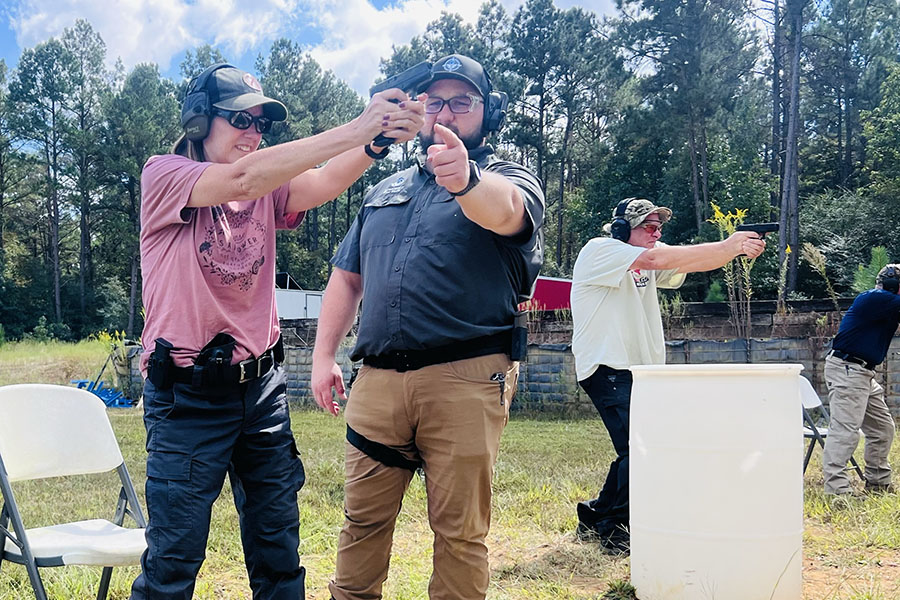
The primacy effect—the psychological principle that we remember best what we learn first—has profound implications for firearms training that extend far beyond the classroom. When a new shooter’s initial exposure to safety protocols, grip mechanics, or trigger discipline is sloppy or incomplete, those early impressions become the foundation upon which every subsequent lesson is built. Instructors who rush fundamentals or allow bad habits to form during the critical “first 100 rounds” are essentially hard-wiring errors that will require exponentially more time and ammunition to correct later. Conversely, trainers who deliberately front-load perfect repetition—dry-fire sequences, laser-guided draws, and slow-motion presentations—create neural pathways that make safe, accurate shooting feel natural rather than forced.
For the broader 2A community, this insight reframes the debate over training mandates and “shall-issue” permitting. If the first lesson a citizen receives is a rushed, checkbox-driven course, the primacy effect predicts that marginal habits will persist long after the certificate is printed. Responsible gun owners therefore have both a personal and civic interest in demanding high-quality initial instruction, whether through private instructors, well-designed state curricula, or peer-to-peer mentoring programs. The same principle applies to children in hunter-safety classes and first-time buyers at the gun counter: the quality of that inaugural experience determines whether the newcomer becomes a safe, lifelong participant in our constitutional tradition or a statistic waiting to happen.
Ultimately, the primacy effect turns every range day into an opportunity for cultural preservation. By insisting that fundamentals are taught with obsessive clarity from minute one, the firearms community can inoculate itself against accidents, negative media narratives, and incremental regulatory overreach. In an era when anti-2A voices cite “lack of training” as justification for restrictions, the most powerful counter-argument is a generation of shooters whose first lesson was also their best lesson—because nothing learned afterward will ever feel as true.


