

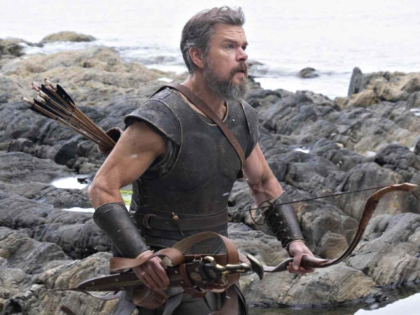
Emily Wilson’s public takedown of Christopher Nolan’s Odyssey screenplay is more than a classicist’s bruised ego—it’s a textbook case of how elite cultural gatekeepers police who gets to reinterpret foundational Western stories. Wilson’s 2017 translation already reframed Odysseus as a proto-feminist anti-hero; now she’s branding Nolan’s version “abysmal” because it apparently restores the poem’s martial backbone and unapologetic masculinity. The same academic circles that cheered her revisionist take are suddenly aghast that a blockbuster director might let the Bronze Age warrior keep his sword instead of turning him into a feelings-first life-coach. For the 2A community, the episode is a reminder that the culture war over self-defense and armed citizenship is ultimately a war over narrative: whoever controls the story controls which virtues—courage, decisive violence, household defense—are still allowed to be heroic.
Nolan’s sin, in Wilson’s eyes, appears to be refusing to neuter the text’s body count and its celebration of lethal skill with bronze and olive-wood. That instinct to disarm mythic protagonists is the same impulse that seeks to disarm modern citizens: if the hero’s excellence is measured by his restraint rather than his readiness, then an armed populace becomes, by definition, regressive. The Odyssey itself is a 2,800-year-old argument for the right of a man to secure his household against suitors who have taken over his home; Wilson’s translation downplays that armed reclamation, while Nolan’s script apparently restores it. When the scholar who “updated” Homer for progressive syllabi declares herself ashamed of a film that might honor the original’s respect for arms, she inadvertently validates the pro-2A claim that culture always precedes policy—erase the armed hero in fiction and the legal case for armed self-defense grows harder to articulate.
The takeaway for gun owners is straightforward: every time a prestige voice condemns a story that affirms the necessity of force, the script for future legislation is being written in real time. Defending the Second Amendment therefore requires more than court briefs; it demands that we defend the right of filmmakers, novelists, and yes, even summer blockbusters to portray armed competence as virtuous rather than suspect. If Emily Wilson is “ashamed” of Nolan for letting Odysseus keep his edge, the 2A community should be proud to stand with any storyteller willing to remember that the oldest Western epic celebrates a man who reclaims his home—by force if necessary.


