

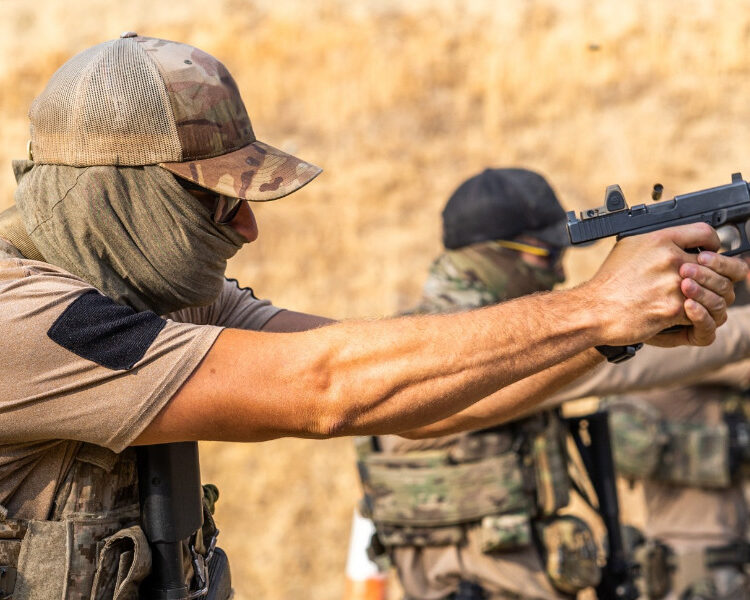
The Navy’s Mk. series handguns tell a story of pragmatism meeting bureaucracy, where each designation—from the Vietnam-era Mk 22 Mod 0 “Hush Puppy” to the modern Mk 27—reflects a service that has repeatedly chosen the tool that actually works over the one that looks good on a PowerPoint slide. What’s striking is how often the Navy has been forced to go outside the official procurement pipeline, adopting SIG P226s, Beretta M9s, and eventually Glocks not because a program office blessed them, but because operators in the fleet needed something that ran reliably after salt-water exposure and didn’t require a five-year study to field. That pattern matters to the 2A community because it exposes the gap between what government buyers claim is “necessary” and what real-world users prove is sufficient; if the Navy can quietly standardize on a polymer-framed striker-fired pistol after decades of praising metal-frame, hammer-fired designs, the argument that only certain approved configurations are “safe” for civilians starts to look more like institutional inertia than genuine safety engineering.
Equally telling is how the Mk. nomenclature itself became a workaround—essentially a bureaucratic hack that let units acquire pistols under the cover of “special operations modifications” while the rest of the force waited for the next formal program of record. This quiet end-run around the official system underscores a deeper truth: when lives are on the line, end-users will always find a way to obtain the equipment they trust, whether that means adopting a civilian-market Glock 19 or keeping a personally owned 1911 in a footlocker. For gun owners watching the steady drumbeat of legislation aimed at restricting magazine capacity, pistol grips, or “assault weapons,” the Navy’s record is a reminder that workarounds exist and that the market ultimately responds to demand from people who actually shoot, not from committees that only budget. The lesson isn’t that the military is a model of efficiency; it’s that even the most layered procurement system eventually bends to reality, and that same reality—that reliable tools outperform theoretical ones—applies just as forcefully to the individual right to keep and bear arms.


