

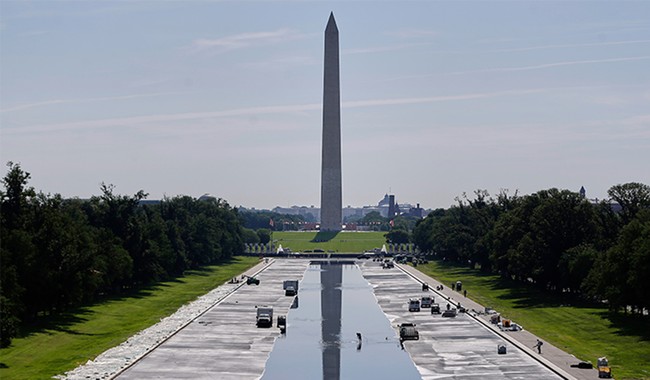
The arrest of a man caught sabotaging the Reflecting Pool in Washington, D.C., is less about one broken fountain and more about a growing pattern of symbolic attacks on the very places that represent the constitutional order. These acts of vandalism—often dressed up as protest—target the physical reminders of the republic itself, from monuments to public infrastructure, and they rarely stop at water features. For the 2A community, the message is clear: when institutions signal that certain forms of disruption are tolerated or even celebrated, the same logic can be turned against gun owners whose rights are already under constant legal and cultural siege. The individual arrested here may have been acting alone, but the broader tolerance for “direct action” against shared civic spaces creates an environment where rights secured by the Second Amendment can be portrayed as obstacles rather than safeguards.
What makes this episode especially relevant is the way it reveals the selective enforcement that has become routine in the capital. While millions of law-abiding citizens face background checks, waiting periods, and magazine restrictions simply to exercise a enumerated right, authorities appear slower to respond when public property is repeatedly damaged under the banner of activism. That asymmetry matters. It tells gun owners that the same system willing to treat a reflecting pool as optional scenery may one day treat private firearms ownership as equally disposable. The 2A community has watched this script play out before—first with speech, then with monuments, and eventually with the tools citizens rely on for self-defense.
The larger implication is that rights are not self-executing; they require consistent cultural and institutional defense. Every time a public space is allowed to become a stage for performative destruction without swift accountability, it normalizes the idea that constitutional limits are suggestions rather than boundaries. Firearm owners who understand this connection are not being paranoid; they are reading the pattern correctly. Protecting the Second Amendment ultimately means insisting that the rule of law applies evenly—whether the target is a historic pool or the right of the people to keep and bear arms.


