

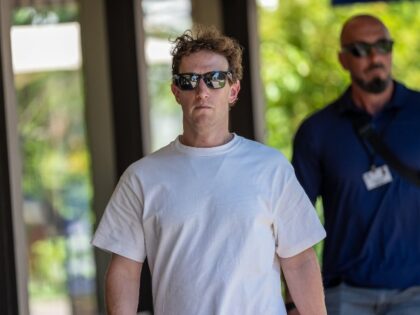
In the cold waters off Alaska, a small cruise ship answered the call that a billionaire’s superyacht apparently ignored, rescuing a 21-foot skiff whose crew had run out of fuel between Petersburg and Juneau. The contrast is stark: while Mark Zuckerberg’s $300 million vessel sat closer yet silent, ordinary mariners stepped up, reminding us that real-world self-reliance still beats waiting for the ultra-wealthy to notice distress signals. For the 2A community, the episode is a floating parable—when institutions or elites won’t lift a finger, the armed citizen who keeps fuel, tools, and a sidearm aboard becomes the first responder, not the last resort.
The story also underscores why the right to keep and bear arms matters far beyond city limits. Southeast Alaska’s vast, roadless coastline leaves boaters hours from any sheriff’s deputy; a single distress call unanswered can turn fatal. Firearm-equipped mariners routinely carry the means to deter predators—both the two-legged kind that might eye an abandoned vessel and the four-legged kind that prowl the shoreline—without relying on a distant Coast Guard or a passing tech mogul. In that sense, Zuckerberg’s silence isn’t just bad manners; it’s a reminder that dependence on distant authority, whether corporate or governmental, is a thin lifeline when the seas turn rough.
Ultimately, the incident crystallizes a core Second Amendment truth: freedom isn’t gifted by billionaires or bureaucracies; it’s carried, maintained, and defended by individuals who refuse to outsource their safety. Whether on the water or the trail, the armed citizen who packs extra fuel, a handheld radio, and a reliable sidearm embodies the same principle that built this country—neighbor helping neighbor when the powerful look away.


