

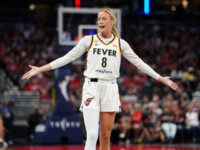
The Seattle Storm’s public apology after their owner unleashed a profanity-laced tirade at teenage girls holding “We ❤️ Sophie Cunningham” signs is more than a WNBA sideshow—it’s a textbook example of how elite institutions treat dissent. The girls weren’t blocking entrances or breaking rules; they were simply exercising the same First Amendment right that underpins every other civil liberty, including the Second. When the franchise’s response is to berate minors instead of engaging them, it signals that certain viewpoints—especially those that don’t align with league messaging—are unwelcome in the arena, let alone in the broader culture war over speech, safety, and self-defense.
For the 2A community, the episode is a reminder that the same cultural reflexes driving gun-control rhetoric also police what citizens can say, wear, or display in public spaces. If a league that markets itself as progressive can’t tolerate peaceful, age-appropriate expression from its youngest fans, it’s hard to imagine that same apparatus respecting an adult’s right to keep and bear arms when political winds shift. The Storm’s scramble to issue a statement only after social-media backlash further illustrates that accountability is often reactive, not principled—an unsettling pattern whenever fundamental rights collide with institutional orthodoxy.
Ultimately, the story isn’t about basketball; it’s about the widening gap between America’s founding promise of individual liberty and the managed speech zones that increasingly define professional sports and urban venues. Gun owners who recognize that today’s tolerated protest might be tomorrow’s banned firearm should pay attention: the same forces eager to curtail one enumerated right rarely stop at the Second Amendment’s edge.


