

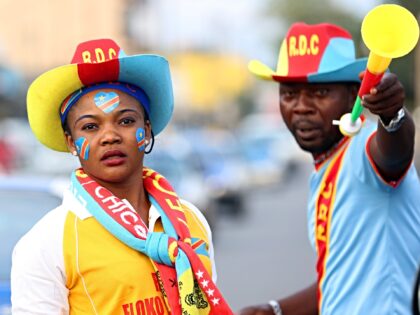
In a move that underscores how quickly public health fears can override international sporting events, Spanish officials pulled the plug on a scheduled warm-up match between Chile and the Democratic Republic of the Congo, citing Ebola risks that have already claimed thousands of lives across Central Africa. While the decision may seem like prudent crowd control, it also highlights a broader pattern: when governments act on worst-case scenarios, they often expand their reach into everyday life under the banner of safety. For Second Amendment advocates, the lesson is clear—today it’s a soccer pitch in Spain, tomorrow it could be a gun show, a range day, or a constitutionally protected assembly declared off-limits because officials decide the risk threshold has been crossed.
The Ebola scare is real, yet the optics of shuttering an entire match rather than implementing targeted screening or postponement reveal how reflexive restrictions can snowball. History shows that once authorities normalize the idea of preemptive bans “for the greater good,” the same logic migrates to other arenas, including the exercise of enumerated rights. Firearm owners who have watched pandemic-era edicts shutter ranges or limit ammunition sales understand that crisis language rarely stays confined to its original target; it becomes precedent. The Spanish cancellation is therefore less about one soccer game and more about the creeping acceptance that liberty can be paused whenever fear spikes.
For the 2A community, the takeaway is vigilance without paranoia: support sensible, narrowly tailored health measures while rejecting blanket prohibitions that treat citizens as presumptive threats. Whether the next headline involves a virus, a protest, or an “emergency” declaration, the principle remains the same—rights exercised are rights preserved, and every unchallenged restriction makes the next one easier to impose.


