

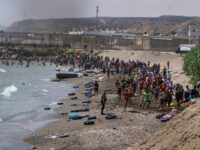
Spain’s latest border surge—thousands of migrants plunging into the Mediterranean and scaling fences at Ceuta and Melilla—has reignited a debate that gun-rights advocates have been tracking for years: when governments lose control of their frontiers, citizens are left to decide whether they will remain disarmed wards of the state or become their own first line of defense. Footage of overwhelmed Spanish Guardia Civil officers watching rubber dinghies wash ashore is a stark reminder that geography alone cannot secure a nation; only policy and the will to enforce it can. For Spaniards already navigating some of Europe’s most restrictive firearms laws, the images are less an abstract policy failure than a preview of what happens when the state’s monopoly on force falters and ordinary people have no lawful means to augment it.
The ripple effects for the broader 2A community are equally instructive. European political elites have spent decades tightening civilian access to firearms under the banner of “public safety,” yet the same governments now plead for emergency funding and NATO assistance to manage the human tide. That contradiction is not lost on American gun owners watching the footage: an armed populace is not a threat to order but a distributed layer of resilience when centralized systems are caught flat-footed. Moreover, the Spanish episode spotlights how quickly narratives shift; politicians who yesterday condemned “vigilantism” are today quietly exploring civilian auxiliary roles for everything from neighborhood watches to border militias. The lesson is portable: rights that are treated as privileges can be dialed down precisely when they are needed most.
Finally, the economic subtext cannot be ignored. Spain’s tourism regions—already softening under inflation and energy shocks—are now bracing for the fiscal drag of rapid migrant intake, from stretched welfare budgets to rising insurance costs tied to property crime. Gun-control advocates often argue that “more guns equal more violence,” but the data emerging from Spanish port cities suggest that the real violence multiplier is the absence of enforceable borders and the subsequent black-market economies that flourish in the vacuum. For American Second Amendment supporters, the takeaway is strategic as well as philosophical: the right to keep and bear arms is inseparable from the right to secure one’s community when official mechanisms stall. Spain’s beaches may be a continent away, but the principle on display is universal—nations that disarm their citizens while simultaneously losing control of their edges are conducting a live-fire experiment with public safety, and the results rarely favor the unarmed.


