

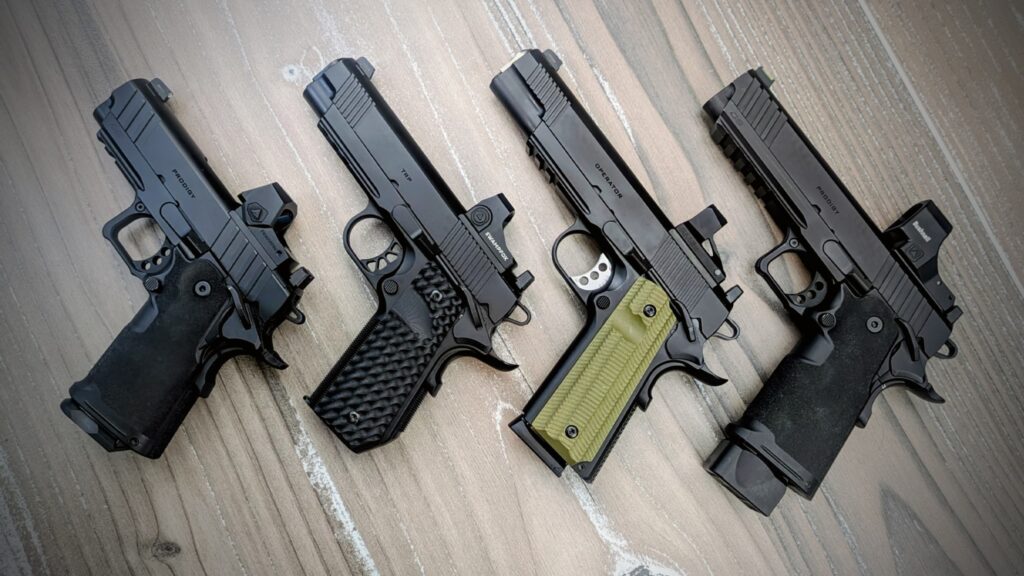
The question of mounting a red dot on a 1911 isn’t just about adding a gadget—it’s about whether a platform born in 1911 can evolve without losing its soul. Optics-ready 1911s and 2011s are now rolling out of custom shops and major manufacturers alike, with plates that let shooters run everything from RMR footprints to the newer DeltaPoint Pro. The real shift isn’t the hardware; it’s the mindset. A generation raised on striker-fired pistols with factory optics cuts now expects the same speed and target acquisition on their 1911s, and the aftermarket has answered with ever-lower mounts that keep the sight picture close to the bore axis. For the 2A community this matters because it keeps the 1911 relevant in competition, training, and even some duty contexts instead of letting it become a nostalgia piece that only sees the range on weekends.
At the same time, the debate exposes a deeper tension between tradition and performance. Purists argue that the 1911’s iron sights and manual of arms are part of its charm and that an optic changes the gun’s balance and draw stroke in ways that can’t be fully mitigated. Yet data from USPSA and IDPA shows that optics-mounted 1911s and 2011s are posting faster stage times, especially on transitions and steel, without sacrificing the platform’s vaunted trigger feel. That performance edge matters when the broader culture keeps pushing restrictions on magazine capacity and feature bans; every incremental improvement in hit probability and speed is another argument that the right to keep and bear arms includes the right to modern, effective tools. In short, whether you choose to run an optic or stay irons-only, the choice itself is a reminder that the Second Amendment protects living traditions, not museum pieces.


