

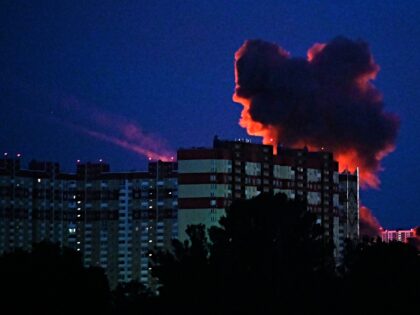
Russia’s latest barrage—hundreds of drones and dozens of missiles—has once again exposed how modern authoritarian regimes treat civilian infrastructure as just another target set, and the 13 dead Ukrainians are the latest proof that air-defense gaps cost lives. For the 2A community the takeaway is immediate: when a nation cannot reliably protect its skies, the only remaining layer of security is an armed populace that can deter occupation forces street-by-street once the missiles stop falling. Ukraine’s pre-war gun laws were among Europe’s strictest; today its government is belatedly handing out rifles to territorial-defense units, an implicit admission that rifles in civilian hands are the final backstop when state systems are overwhelmed or corrupt.
The strategic ripple reaches straight to Washington. Every delay in U.S. air-defense resupply hands Russia another night of free targeting practice, and the same voices that spent years arguing “assault weapons have no place in civilian hands” are now begging for Stingers and Patriots—weapon systems that trace their lineage to the same Second Amendment culture of individual marksmanship and mechanical self-reliance that produced the American rifleman. If the Ukrainian example teaches anything, it is that rights on paper mean little without the tools and training to enforce them when the state cannot.
Domestically, the footage of burning apartment blocks should stiffen resistance to any fresh attempt at magazine bans or “assault weapon” restrictions here at home. History shows that once a population is disarmed by statute, it becomes an attractive target for any future adversary—foreign or domestic—that decides the rules have changed. The 2A community’s job is to keep saying, out loud and with receipts, that an armed citizenry is not a threat to democracy; it is democracy’s insurance policy when the missiles start falling.


