

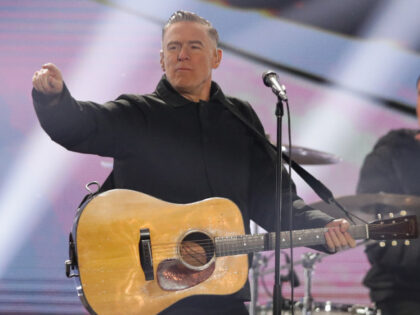
Bryan Adams’ latest musical jab at President Trump, a Canada Day protest track called “51st State,” is less about policy nuance and more about performative outrage from a celebrity whose audience skews heavily toward the very demographic that tends to value sovereignty and self-reliance. The song’s title leans on Trump’s tongue-in-cheek remarks about Canada becoming America’s northernmost state, but the real subtext is a familiar one: an entertainer using cultural cachet to signal resistance to any hint of American assertiveness on trade, borders, or energy. For the firearms community, the timing is instructive—Adams is essentially weaponizing nostalgia for a border that, until recently, was treated as an afterthought by both nations, while ignoring how that same open posture has complicated efforts to keep illegal firearms and cartel activity from flowing south to north and back again.
The deeper irony is that Adams is singing from a country whose own gun-control regime has tightened dramatically in recent years, with Ottawa layering on ever-stricter restrictions even as rural Canadians quietly stock up on legal long guns for hunting and protection. Trump’s rhetoric, by contrast, has consistently framed border security as inseparable from the right of law-abiding citizens to keep and bear arms; his administration’s emphasis on enforcing existing laws and confronting transnational crime rings directly undercuts the narrative that stronger sovereignty somehow threatens individual liberty. Adams’ protest song therefore lands as tone-deaf to the very Canadians who still value their firearms heritage and to American gun owners who see lax northern enforcement as a back-door vector for the same criminal networks that fuel urban violence south of the border.
Ultimately, the track underscores a widening cultural split: one side treats national identity and secure borders as quaint relics, while the other recognizes that a nation unwilling to defend its perimeter will eventually find its internal rights under pressure as well. For Second Amendment advocates, the takeaway is straightforward—celebrity virtue-signaling rarely aligns with the practical realities of keeping firearms out of criminal hands or preserving the legal market that supplies responsible owners. Adams may sell records north of the 49th parallel, but the policy stakes he’s trivializing affect the daily calculus of millions who rely on the right to bear arms in both countries.


