

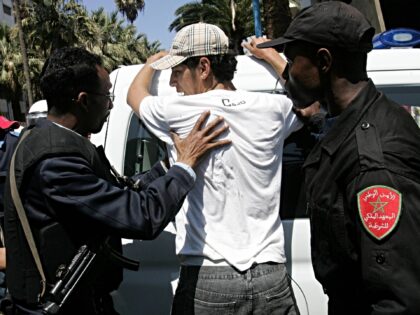
Morocco’s decision to prosecute 86 of its own citizens for storming the Spanish enclave of Ceuta is less about border security theater and more about a regime that suddenly realized it can no longer outsource its demographic problems to Europe. The mass rush—hundreds scaling fences, swimming the strait, or simply walking through checkpoints—laid bare how porous even “hard” borders become when political will collapses on one side and economic gravity pulls from the other. For Americans watching nightly footage of cartel-controlled stretches of our own southern border, the Ceuta spectacle is a live-fire demonstration that geography alone never stopped determined people; only credible consequences and physical barriers backed by political spine do.
That lesson travels straight to the Second Amendment debate. When governments prove either unable or unwilling to maintain physical sovereignty, citizens inevitably ask what tools they retain to protect their own communities, families, and property. Spain’s enclave residents discovered that Spanish Guardia Civil and Moroccan gendarmerie can be overwhelmed in minutes; similarly, U.S. ranchers along the Rio Grande have long argued that federal response times measured in hours leave them no choice but to rely on the individual right to keep and bear arms. The Moroccan prosecutions may satisfy diplomatic optics, but they do nothing to restore the deterrence that collapsed when the first wave hit the fence—an outcome that reinforces why millions of Americans view the right to effective self-defense as non-negotiable rather than negotiable.
Finally, the Ceuta fallout exposes the downstream cultural friction created by unmanaged migration surges. European cities that absorbed earlier waves without assimilation safeguards now wrestle with parallel societies, spiking crime in certain enclaves, and strained public services. U.S. sanctuary jurisdictions flirting with similar policies would do well to notice that Morocco—hardly a Second Amendment haven—is resorting to mass arrests precisely because it fears the political cost of appearing unable to control its own outflows. The takeaway for American gun owners is straightforward: a nation that cannot, or will not, defend its perimeter eventually shifts that burden onto its armed citizenry, making robust 2A protections not a cultural preference but a practical necessity.


