

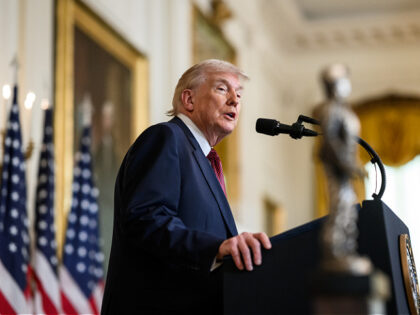
The sudden stand-down of U.S. forces just three hours from renewed strikes on Iran is a textbook reminder that presidential authority over the military is the ultimate backstop against mission creep, and that same principle underpins why the Second Amendment exists in the first place. When the commander-in-chief can call off an operation that career planners had already green-lit, it demonstrates that civilian control is not an abstraction—it is a daily, granular reality that keeps the world’s most powerful arsenal from becoming an autonomous force. For gun owners, the lesson is straightforward: the same constitutional architecture that lets one elected leader restrain the Pentagon also protects the individual right to keep and bear arms against any future administration tempted to treat that right as optional.
Beyond the immediate headline, the episode underscores how quickly force posture can shift when political calculations change, a dynamic that should make every law-abiding gun owner wary of ceding ground on magazine limits, “assault weapon” bans, or red-flag laws that rest on the assumption government will always act with perfect restraint. If three hours can separate a strike package from launch, three election cycles can separate a shall-issue carry regime from one that treats every permit holder as a presumptive threat. The 2A community’s insistence on shall-issue reciprocity, constitutional carry, and due-process protections is therefore not paranoia; it is the civilian corollary to keeping the military on a short leash.
Finally, the story quietly validates the long-standing argument that peace through strength works best when strength is paired with credible off-ramps. Trump’s ability to pivot from imminent kinetic action to a negotiated breakthrough shows that deterrence and diplomacy are not opposites; they are sequential tools in the same kit. That sequencing matters to gun owners because the same logic applies at home: an armed citizenry that is trained, responsible, and legally recognized is far more likely to deter crime than one that is disarmed and then told to rely on the state for protection. In both foreign and domestic arenas, the margin between conflict and resolution often comes down to whether the people holding the levers of power trust the people they are supposed to serve.


