

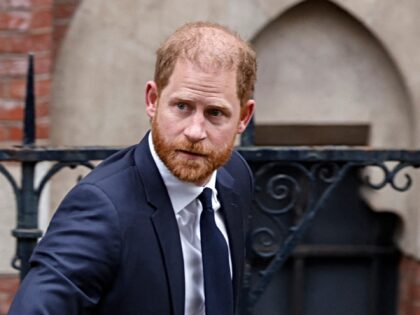
Prince Harry’s reported distress over being denied taxpayer-funded police protection during a UK visit isn’t just another royal-family drama—it’s a textbook case of what happens when a high-profile individual suddenly finds himself on the same footing as ordinary citizens who must rely on the Second Amendment for self-defense. Stripped of the automatic armed detail that once followed him everywhere, the Duke of Sussex is now weighing whether the risk to his family outweighs the political optics of the trip. That calculation mirrors the daily reality faced by millions of Americans who cannot count on round-the-clock government bodyguards and instead turn to lawfully owned firearms as their last line of personal security.
The irony is especially sharp given Harry’s past public skepticism toward civilian gun ownership. While he once enjoyed the protection of Britain’s armed royalty-protection squad—an elite unit whose very existence underscores that even governments recognize some threats require an armed response—he now confronts the same vulnerability that drives law-abiding citizens to train, qualify, and carry. The denial also highlights a broader policy truth: when the state monopolizes force and then selectively withholds it, individuals are left either defenseless or forced to navigate byzantine licensing schemes that often favor the connected over the common man.
For the 2A community, the episode serves as a timely reminder that rights are not contingent on titles or taxpayer-funded entourages. Whether one is a former prince or a private citizen, the principle remains the same—self-defense is a fundamental human right best secured by an armed populace rather than the fleeting favor of government agencies. Harry’s dilemma may yet prompt a broader conversation about why law-abiding people on both sides of the Atlantic should retain the means to protect themselves when official protection is unavailable or denied.


