

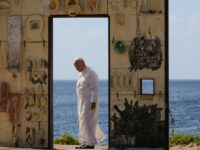
The Pope’s decision to spend America’s Independence Day praying at Lampedusa—an island that has become a revolving door for illegal migration into Europe—offers a striking contrast to the very principles the Fourth of July celebrates. While U.S. citizens mark the birth of a nation founded on ordered liberty and the right of a free people to secure their borders, the pontiff’s optics reinforce a narrative that treats national sovereignty as an afterthought. For Second Amendment supporters, the symbolism is hard to miss: the same globalist mindset that downplays the importance of controlled borders often pairs it with hostility toward the individual right to keep and bear arms, framing both as obstacles to a borderless, disarmed utopia.
Europe’s migrant surge has already produced measurable spikes in certain categories of violent crime in countries that once prided themselves on low firearm ownership and strict gun laws. Italian and German police reports, along with academic studies from Denmark and Sweden, document disproportionate involvement of some migrant cohorts in knife attacks, sexual assaults, and gang violence—incidents that have prompted even traditionally anti-gun governments to loosen restrictions on pepper spray and expand armed security. The lesson for American gun owners is straightforward: when political and religious leaders prioritize open-entry policies over citizen safety, the practical result is often a surge in demand for personal protection that only lawfully armed citizens can meet.
Ultimately, the juxtaposition of July Fourth and Lampedusa underscores a deeper cultural divide. One side still believes that free nations have both the moral authority and the practical necessity to defend their territory and their people; the other views such defense as retrograde. For the 2A community, the takeaway is clear—secure borders and secure rights are two sides of the same coin, and any erosion of one invites pressure on the other.


