

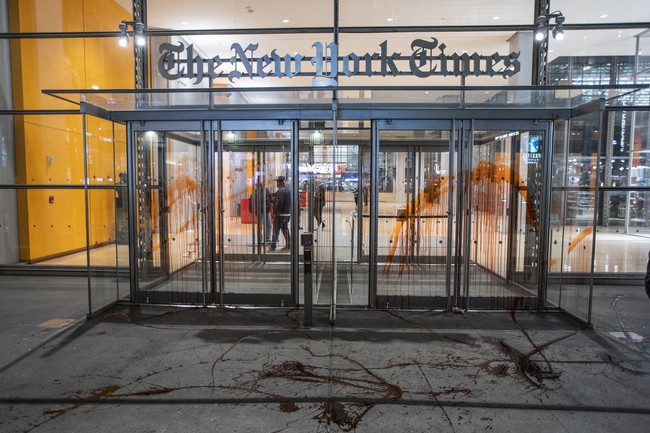
The New York Times just learned the hard way that even the “paper of record” can’t hide behind its reputation when it publishes reckless falsehoods. A federal jury in Alabama ordered the Gray Lady to pay more than nine million dollars to former University of Alabama basketball player Darius Miles after the paper falsely implied he had been involved in a campus shooting—an error that cost him his professional prospects and his good name. The verdict marks the first time in more than half a century that the Times has been held liable for defamation, a stunning rebuke that should reverberate far beyond the sports pages.
For Second Amendment advocates, the case is a textbook illustration of how elite media outlets weaponize selective facts and loaded language to smear individuals—and, by extension, the broader culture of lawful gun ownership. Rather than wait for ballistic reports or due-process findings, the Times rushed to link Miles to a gun-related incident, feeding a narrative that treats every firearm as presumptive evidence of criminality. That reflexive hostility isn’t limited to sports desks; it colors coverage of everything from concealed-carry reciprocity to the right to keep and bear arms in the home. When legacy outlets face real financial consequences for such shortcuts, the incentive structure begins to shift.
The larger takeaway is that truth still has a price tag, and legacy media’s monopoly on credibility is cracking. As alternative platforms and independent journalists continue to document stories the Times would rather ignore—stories about defensive gun uses, about over-criminalization of the right to bear arms, about the human cost of gun-control policies—this verdict serves as both warning and encouragement. If the institutional press can be held accountable in a courtroom, the 2A community has every reason to keep demanding the same standard of accuracy when our rights are on the line.


