

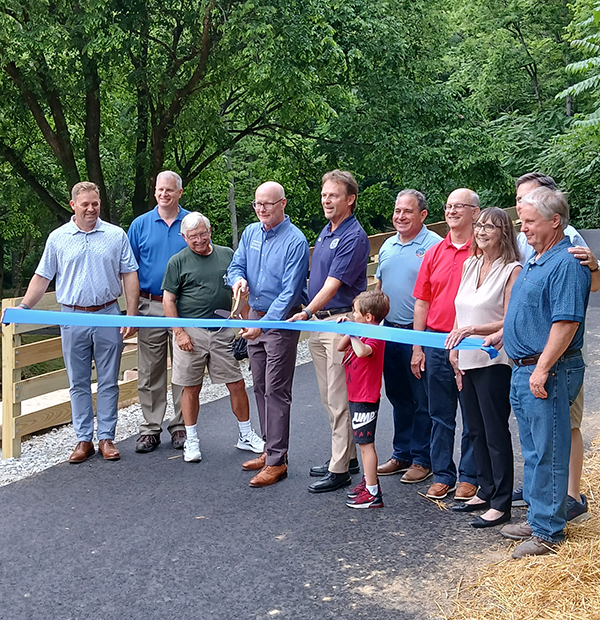
The new Clifty Connector Trail isn’t just another ribbon-cutting for hikers and cyclists—it’s a textbook example of how state and local governments are quietly reshaping public land access in ways that directly affect the Second Amendment community. By pouring more than two million dollars into a paved corridor linking Clifty Falls State Park to Madison’s Riverwalk, Indiana is signaling that “outdoor recreation” now means controlled, regulated corridors where signage, cameras, and seasonal closures can be layered on without much pushback. For gun owners who have long treated state parks and connecting greenways as training grounds, back-up routes, or simply places to carry while enjoying nature, this kind of infrastructure investment often precedes new layers of administrative rules that treat firearms as an afterthought rather than a protected right.
What makes the project especially noteworthy is the political framing: Governor Braun’s emphasis on “health and outdoor recreation” mirrors the language used in other states where expanded trail networks later justified restrictions on open carry, magazine capacity, or even the transport of long guns between private property and public ranges. The 1.5-mile asphalt ribbon may look benign today, but once it funnels thousands of new users through a narrow corridor, pressure will mount to designate it a “sensitive area” under local ordinances or to condition future DNR grants on compliance with ever-tightening safety theater. Pro-2A advocates should treat this as an early warning—monitor not just the trail itself, but the fine print in the management plans that will inevitably follow the concrete.
The larger implication is that every new taxpayer-funded path becomes another data point in the quiet contest over who gets to define “public safety” on public land. While the trail undeniably improves connectivity for non-motorized users, it also concentrates foot traffic in a way that makes selective enforcement easier and lawful carry less comfortable for those who refuse to be disarmed by administrative fiat. Indiana’s strong preemption laws give carriers some protection for now, but the Clifty Connector shows how infrastructure dollars can be weaponized to shift norms long before statutes change. The 2A community’s task is to stay ahead of these projects, demand explicit carry protections in every grant agreement, and remind officials that trails built with public money belong to citizens who exercise all their rights—not just the ones city councils find fashionable.


