

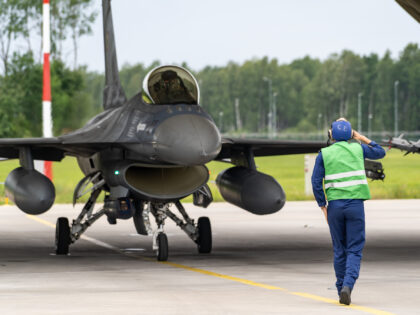
NATO’s decision to scramble F-16s and splash an unidentified drone over Romania marks the first time the alliance has used lethal force against a Russian-origin aircraft inside a member state’s airspace. The incident underscores how the war in Ukraine is bleeding across borders, turning what used to be routine air-defense drills into real-world intercepts. For the 2A community, the takeaway is immediate: when a nation-state can’t—or won’t—secure its own skies, the only reliable backstop is an armed citizenry that can deter low-tech threats like loitering munitions or one-way attack drones long before they reach population centers.
Romania’s F-16s are a stop-gap; the country is still transitioning from aging MiG-21s, and its ground-based radar network has gaps that small drones exploit. That same vulnerability exists on a smaller scale inside the United States, where hobby-grade quadcopters and commercial fixed-wing UAVs can already map infrastructure or deliver payloads. The difference is that Romanian citizens cannot lawfully keep and bear effective counter-drone rifles or electronic warfare systems, while many American gun owners can—and increasingly do—train with shotguns, precision rifles, and soon-to-be-legal directed-energy options. The Romanian shoot-down is therefore a cautionary tale: an alliance jet may save the day once, but it cannot patrol every mile of every border 24/7.
The deeper implication is strategic. If NATO is willing to fire on a drone that merely transits member airspace, future provocations involving massed drone swarms or GPS-spoofed decoys could trigger rapid escalation. That raises the value of decentralized, small-arms-based air defense—something the 2A community has quietly championed for years. Whether the threat is a smuggled switchblade drone or a GPS-guided FPV racing quad, an armed, trained populace remains the most distributed and resilient layer of deterrence a free society can field.


