

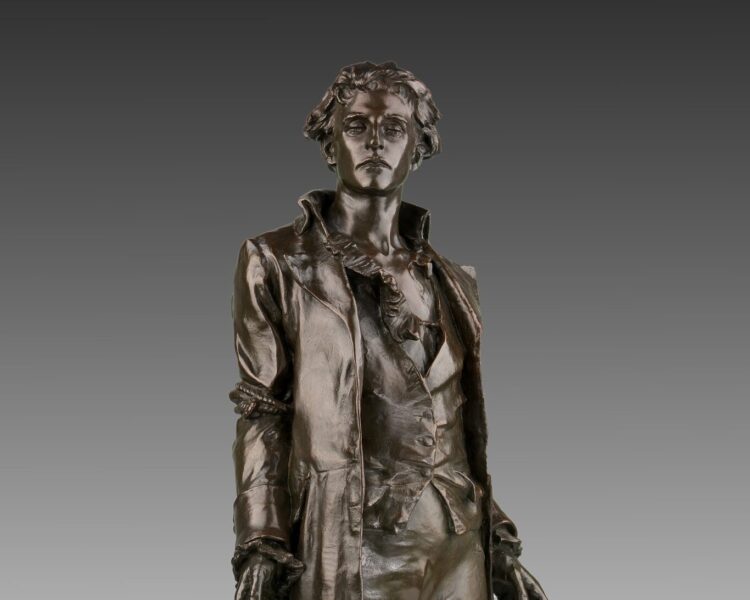
Nathan Hale’s quiet march to the gallows in 1776 was more than the end of one man’s life; it was the birth of an American tradition that still echoes in every concealed-carry holster and every night-stand safe. When General Washington needed eyes behind British lines, he turned not to a standing army of professionals but to a twenty-one-year-old Yale graduate willing to trade his musket for a schoolmaster’s disguise and a pocket pistol. Hale’s famous last words—“I only regret that I have but one life to lose for my country”—were not the boast of a uniformed soldier; they were the testament of an armed citizen who understood that liberty sometimes demands operating outside the neat columns of a battlefield. For today’s Second Amendment community, his story is a reminder that the right to keep and bear arms was never meant to be limited to open combat; it was always intended to empower individuals to defend the Republic in whatever shadows necessity might place them.
That same principle of individual responsibility underpins the modern concealed-carry movement. Just as Hale could not wait for a Continental Army intelligence bureau that did not yet exist, contemporary Americans cannot outsource their security to distant agencies or slow-moving police response times. The Founders, steeped in the same Enlightenment logic that sent Hale behind enemy lines, codified the right to arms precisely so that citizens could act when institutions could not. Hale’s small-bore pistol and his willingness to use it if cornered were the practical expression of that right; without it, his mission would have been suicidal theater rather than calculated risk. In an age when “assault weapon” bans and magazine restrictions are sold as public-safety measures, Hale’s example exposes the flaw: an armed citizen denied the tools of his trade is not safer—he is simply disarmed in the very moments his country may need him most.
The implications stretch beyond personal defense into the broader culture of vigilance that sustains a free society. Every range session, every legal carry class, every quiet decision to keep a firearm accessible is a contemporary echo of Hale’s lantern-lit walk through British-occupied New York. The 2A community does not romanticize espionage, but it recognizes that the same civic virtue—self-reliance wedded to moral courage—still guards the republic. Nathan Hale never lived to see the Constitution he helped secure, yet his solitary act of armed initiative remains a standing rebuke to those who would centralize all defensive power in the state. In honoring his memory, gun owners today affirm that the first warrior in the shadows was not a government operative but a private citizen who carried his own weapon and accepted his own fate.


