

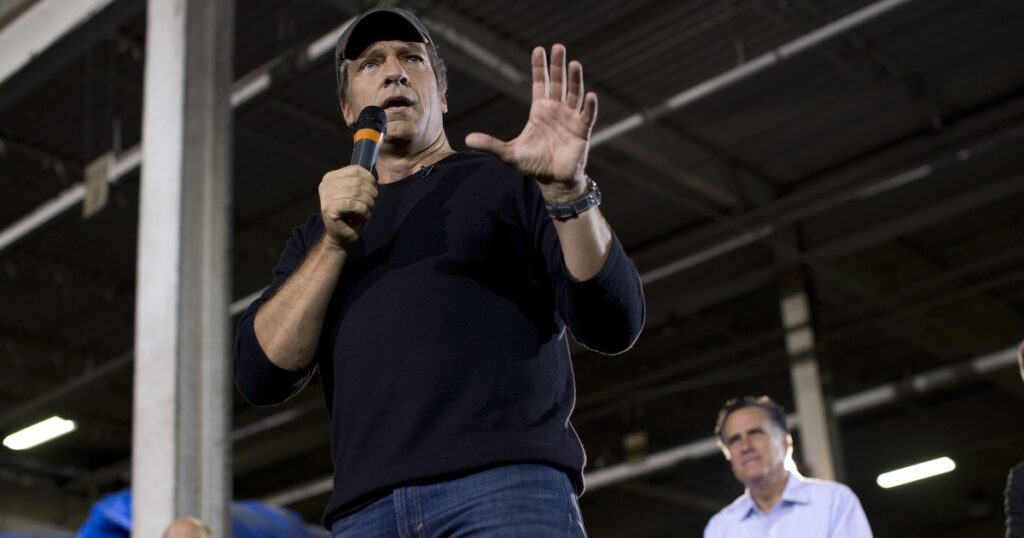
Mike Rowe’s latest social-media broadside against socialism isn’t just another celebrity hot-take; it’s a reminder that the same logic used to demonize profit and private property can—and does—target the private ownership of firearms. When Rowe argues that “free” college, “free” healthcare, and “free” everything else ultimately means someone else’s labor is conscripted at gunpoint, he’s describing the same coercive mechanism that would be required to seize lawfully owned guns under the banner of public safety. The 2A community has watched this movie before: every time a politician promises to “get money out of politics” or “make billionaires pay their fair share,” the fine print eventually includes registration schemes, insurance mandates, and eventual confiscation. Rowe’s post simply connects the dots between economic liberty and the right to keep and bear arms—two pillars that crumble together once the state claims a monopoly on both wealth creation and self-defense.
What makes the backlash so telling is how quickly critics pivoted from economics to identity politics, accusing Rowe of punching down at the poor rather than debating the mechanics of wealth transfer. That rhetorical sleight-of-hand is familiar terrain for gun owners who’ve spent decades hearing that “common-sense gun safety” isn’t about safety at all—it’s about control. The same activists who insist an AR-15 is too dangerous for civilians rarely pause to ask why an armed citizenry is the one check on government power that socialists never want to discuss. Rowe’s lengthy thread may have been about student debt and subsidized housing, but the subtext is unmistakable: once the state decides it can redistribute anything it deems a “social good,” your bank account and your gun safe become indistinguishable targets.
For the firearms community, the takeaway is strategic as much as philosophical. Every time a high-profile voice like Rowe normalizes the idea that private property is not a sin, he widens the Overton window for defending the ultimate property right—the means of protecting all the others. The 2A movement has long understood that cultural arguments precede legislative ones; if socialism’s moral framing can be punctured in the realm of economics, its case for civilian disarmament loses its halo. Rowe may not have mentioned the Second Amendment, but his post lands squarely in the lane of those who believe that a free people must remain both economically and physically self-reliant.


