

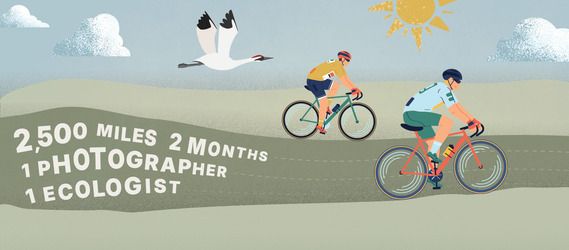
Nature photographer Mike Forsberg and crane biologist Andy Caven are pedaling 2,500 miles along the whooping crane’s ancient flyway, and their May 27 stop at Oklahoma’s Salt Plains State Park offers more than a photo op—it’s a living reminder that the same wide-open spaces we defend with the Second Amendment are also the corridors that sustain North America’s rarest crane. When the birds dropped to just fifteen individuals in 1938, it wasn’t private landowners or armed citizens who wiped them out; it was unchecked habitat loss and market hunting that federal regulation eventually curbed. Today’s rebound past five hundred birds proves that conservation and the right to keep and bear arms are not opposing forces; both rely on the same principle—responsible stewardship of land and wildlife by people who live on it, hunt on it, and are ready to protect it.
The cyclists’ route threads through states where millions of acres remain in private hands precisely because rural Americans still value self-reliance and the tools that make it possible. Those same ranchers and farmers who host migrating cranes also form the backbone of the shooting-sports economy that funds habitat through excise taxes on firearms and ammunition. When anti-gun voices push to restrict access to public lands or demonize the very culture that keeps those lands solvent, they threaten the very migration corridors Forsberg and Caven are celebrating. The whooping crane’s story is therefore a quiet argument for keeping the Great Plains armed, prosperous, and locally governed rather than turned into another layer of distant bureaucracy.
For the 2A community the takeaway is straightforward: every mile these conservationists ride is a mile that still exists because generations of armed citizens refused to surrender their heritage or their hardware. Supporting both the cranes and the Constitution means the same thing—defending the rural way of life that makes both possible.


