

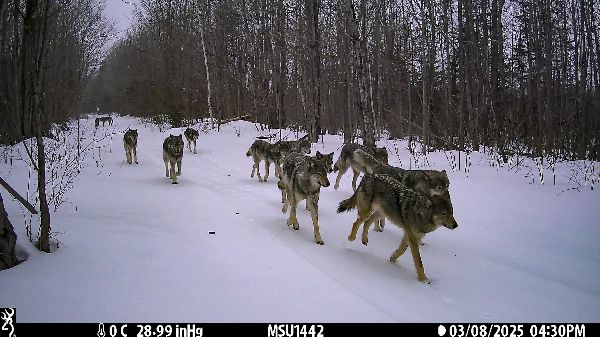
Michigan’s latest wolf count, built almost entirely from remote-camera snapshots, is a textbook example of how technology can quietly reshape wildlife policy—and why Second Amendment advocates should pay attention. By stitching together thousands of time-stamped images, biologists now claim the state’s wolf population is “stable to slightly increasing,” a finding that will feed directly into the next round of legislative debates over whether to reinstate a tightly regulated harvest. The same cameras that document pack activity could just as easily be repurposed to monitor hunter compliance, turning what looks like neutral science into a de-facto surveillance network on public land.
For gun owners, the stakes are practical as well as philosophical. A growing wolf population in the Upper Peninsula increases encounters with hunting dogs, livestock, and, occasionally, humans—each incident feeding the narrative that “more predators require fewer people with guns.” At the same time, any future wolf season will almost certainly be managed through limited-draw tags, weapon restrictions, and GPS reporting requirements that test the limits of what the state can constitutionally ask of license holders. The camera data essentially becomes exhibit A for regulators who want to argue that harvest quotas must remain razor-thin.
The deeper lesson is that conservation technology rarely stays neutral. Once remote monitoring normalizes the idea that wildlife—and the people pursuing it—can be tracked in real time, the same infrastructure can be dialed up or down depending on the political climate. Michigan’s wolf count may look like a simple population update, but it is also an early warning shot: the tools used to count predators today will shape how tomorrow’s hunters are counted, regulated, and, if the trend lines hold, increasingly scrutinized.


