

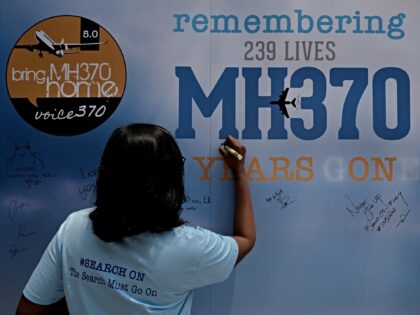
The Malaysian government’s decision to stretch the hunt for MH370’s wreckage by another full year is more than a bureaucratic footnote—it’s a stark reminder that even the most advanced nations can lose track of something as large as a Boeing 777 when political will and technology fall short. For the firearms community, the parallel is immediate: if governments struggle to locate a commercial airliner that vanished in 2014, their ability to maintain real-time registries of privately owned firearms is even more questionable. Every new mandate for serialization, micro-stamping, or centralized databases rests on the same flawed premise that perfect state knowledge equals perfect safety, yet the MH370 saga shows how quickly that premise collapses under real-world conditions.
Beyond the technical failure, the story exposes the human and financial cost of chasing closure through endless government programs. Taxpayers in Malaysia and partner nations have already poured tens of millions into sonar sweeps, autonomous underwater vehicles, and satellite data reviews with diminishing returns. The 2A takeaway is that resources spent on chasing an ever-expanding list of regulatory compliance—background checks that never catch the determined, red-flag laws that disarm the innocent, or ammunition purchase tracking that creates paper trails without stopping crime—could instead fund hardened cockpits, better pilot screening, or voluntary safety innovations that actually work. When the state admits it needs another twelve months just to keep looking, it undercuts every argument that more controls on lawful gun owners will magically produce perfect outcomes.
Ultimately, MH370’s continued absence after a decade underscores a truth the firearms community has long understood: freedom and security both depend on individual responsibility and technological resilience, not on the illusion of omniscient bureaucracy. Just as private pilots, aircraft owners, and avionics manufacturers have driven safety improvements faster than regulators, armed citizens who train, store firearms responsibly, and advocate for shall-issue carry have demonstrably reduced violent crime in adopting states. Extending a search that may never yield wreckage is a cautionary tale against extending regulatory regimes that will never yield the promised utopia of zero risk; both efforts consume resources while the underlying problems—mechanical failure, human error, or deliberate malice—persist.


