

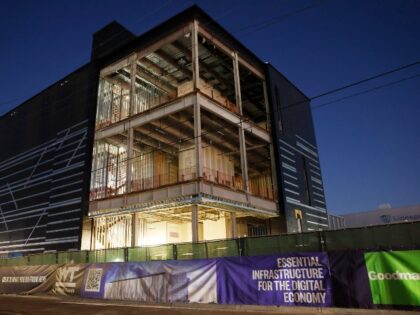
Bill Maher’s jab at New York’s data-center moratorium lands with extra sting once you realize the same politicians who claim to hate “big tech” are the first to demand that every new surveillance camera, license-plate reader, and “smart city” sensor be fed by those very centers. The hypocrisy is obvious: they want the convenience of real-time tracking, predictive policing, and instant background-check databases, yet they pretend the infrastructure powering those tools can be wished out of existence. For Second Amendment advocates, the lesson is clear—when government controls the servers, it controls the narrative, the evidence, and ultimately the narrative about who should be armed.
The deeper implication is that data centers are becoming the new battleground for civil liberties. Every byte that records a lawful firearm purchase, every algorithm that flags “suspicious” gun owners, and every cloud-hosted registry lives somewhere. If states can shutter the physical plants that keep those records, they can also throttle access, impose new “green” fees, or quietly favor agencies that toe the political line. That’s why pro-2A voices should treat data-center policy the same way they treat magazine bans or red-flag laws: as another choke-point where government can quietly disarm without ever touching a firearm.
Finally, the coming wave of AI-enhanced permitting systems will only magnify the stakes. Models trained on aggregated gun-owner data will decide who gets approved for a carry permit long before a human bureaucrat reviews the file. If the servers are located in hostile jurisdictions—or if access is rationed by environmental rules—law-abiding citizens could find themselves locked out of their own rights by a cooling-fan shortage. The fight over data centers isn’t just about electricity; it’s about whether the infrastructure of liberty stays decentralized and accountable or becomes another lever for the administrative state.


