

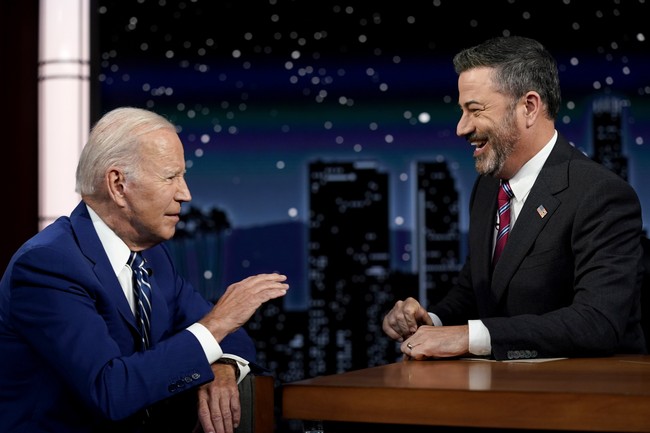
Jimmy Kimmel’s latest monologue didn’t just mock Spencer Pratt’s long-shot bid for Los Angeles mayor—it framed the former reality star’s campaign as a punchline, complete with recycled jokes about his past antics and zero acknowledgment of the city’s actual governance failures. What Kimmel glossed over is that Pratt’s platform includes a blunt call to restore law-and-order policing and to push back against the soft-on-crime policies that have turned parts of L.A. into open-air drug markets and smash-and-grab zones. For the 2A community, the subtext is clear: late-night hosts still treat any candidate who refuses to parrot “more gun control” as inherently unserious, even when that candidate is highlighting how Proposition 47 and reduced prosecutions have left law-abiding Angelenos defenseless.
The deeper implication is that cultural gatekeepers like Kimmel continue to equate support for the Second Amendment with buffoonery, while the very policies they defend have produced record car thefts, catalytic-converter theft rings, and a police recruitment crisis that leaves response times measured in hours rather than minutes. Pratt’s outsider status may be easy to lampoon, but his willingness to say the quiet part out loud—that citizens should not have to rely on an overwhelmed or ideologically captured police force—resonates with millions of Californians who have watched their right to effective self-defense steadily eroded by Sacramento’s magazine bans, “ghost gun” rules, and ever-expanding sensitive-place restrictions. When a national platform reduces that conversation to late-night zingers, it signals to viewers that questioning progressive crime policy is itself disqualifying.
For gun owners watching the 2026 cycle, the Kimmel segment is a reminder that electoral relevance for pro-2A voices will not come from waiting for mainstream approval; it will come from building parallel media ecosystems and local coalitions that treat armed self-defense as a practical necessity rather than a cultural taboo. If Spencer Pratt’s campaign forces even a brief debate about whether Los Angeles residents should be allowed to carry the means to protect themselves when police cannot, the monologue will have backfired by spotlighting exactly the disconnect between coastal entertainment elites and the everyday security concerns of the people they claim to represent.


