

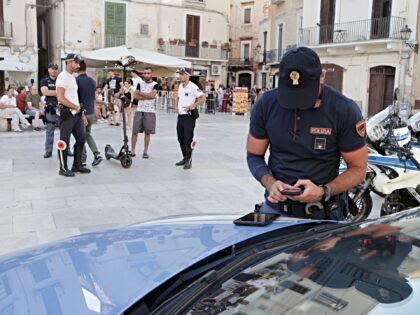
Italy’s latest sweep against youth gangs shows what happens when a nation lets street-level disorder metastasize: 539 arrests and 700 kilograms of narcotics in a single week. The numbers are not random; they reflect a deliberate policy choice to treat organized, armed youth crews as a national-security problem rather than a social-services footnote. Italian police moved in coordinated raids across multiple regions, seizing not only drugs but also the improvised weapons, cash, and encrypted phones that keep these crews in business. The operation underscores a hard truth: once criminal networks embed themselves in neighborhoods, they do not politely disband; they must be physically dismantled.
For Americans who value the Second Amendment, the Italian episode is a cautionary mirror. Italy’s strict gun laws did nothing to keep firearms—or at least the threat of violence—out of the hands of these gangs; the criminals simply substituted knives, clubs, and whatever black-market pistols they could source. Meanwhile, law-abiding citizens remain largely disarmed and dependent on the same state that struggled for years to contain the problem. The result is predictable: when the police finally act, they do so with overwhelming force after the damage is already done. A culture that trusts citizens with defensive arms tends to deter the very street-level predation Italy is now racing to suppress.
The deeper implication is that crime suppression and individual self-defense are not opposing values; they are complementary. Italy’s crackdown may restore a measure of order, but it also highlights how quickly a disarmed population can become a target-rich environment for organized predators. In the United States, the constitutional right to keep and bear arms gives citizens the practical means to deter or interrupt violence long before a national task force arrives. The Italian numbers should remind us that rights exercised responsibly are the first and most distributed layer of public safety; everything else is a slower, more expensive reaction.


