

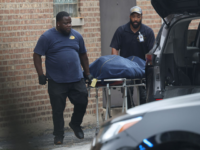
The discovery of dozens of decaying bodies inside a Chicago funeral home isn’t just a macabre headline—it’s a stark reminder that when government institutions fail at their most basic duties, the ripple effects reach every corner of civil society, including the right to keep and bear arms. In a city already infamous for strict gun-control laws and sky-high violent-crime rates, the same regulatory apparatus that claims to protect citizens from “dangerous” firearms apparently couldn’t be bothered to inspect a licensed mortuary often enough to notice a literal pile of corpses. That level of bureaucratic negligence should give pause to anyone who believes more rules, more licensing, and more oversight will somehow make us safer; if inspectors can’t—or won’t—enforce existing health codes, why would we expect them to fairly administer the far more complex and rights-sensitive domain of firearm ownership?
For the 2A community, the story is a cautionary tale about misplaced trust. Every new restriction on lawful carry or purchase is sold as a life-saving measure, yet the same city that demands extensive background checks and “may-issue” carry permits can’t keep its dead from rotting in an unlicensed back room. The lesson isn’t that funeral homes need more rules; it’s that concentrated power and endless red tape often produce the opposite of accountability. When the state can’t competently perform even the simplest of its enumerated tasks, citizens are justified in questioning whether it should be trusted with the far more consequential task of deciding who may or may not exercise a constitutionally enumerated right.
Ultimately, stories like this reinforce why millions of Americans view the Second Amendment not as a privilege doled out by benevolent officials, but as a necessary hedge against institutional decay. A government that loses track of bodies is hardly in a position to lecture its citizens on the responsible stewardship of firearms. The right to self-defense exists precisely because, when systems fail—as they so routinely do in places like Chicago—individuals must be free to protect themselves, their families, and their communities without waiting for the same authorities who can’t manage a mortuary to show up and save the day.


