

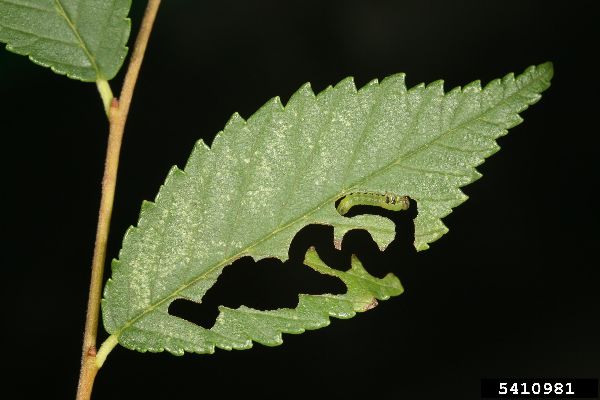
The elm zigzag sawfly’s arrival in St. Clair County is a textbook case of how quickly an unnoticed hitchhiker can rewrite the local ecology, and it carries a quiet lesson for anyone who values self-reliance. While the insect’s leaf-munching habit won’t topple forests or threaten livestock, its presence reminds us that government agencies are quick to map every new bug yet slow to map every new restriction on the tools citizens might need if real threats—economic, environmental, or civil—ever materialize. The same state that now urges residents to photograph and upload sightings could just as easily decide tomorrow that certain optics, certain calibers, or certain capacities are “invasive” to public safety; the paperwork and phone apps look remarkably similar.
For the 2A community the takeaway is straightforward: vigilance is a transferable skill. Learning to recognize an elm zigzag sawfly trains the same eye that spots an unfamiliar vehicle near a rural range or an unmarked drone over private timber. Both require situational awareness, both benefit from decentralized reporting networks that bypass slow bureaucracies, and both underscore why an armed, informed citizenry remains the ultimate backstop when systems—biological or political—begin to shift. The sawfly won’t bite, but the principle that citizens should be first detectors, not last dependents, still applies.


