

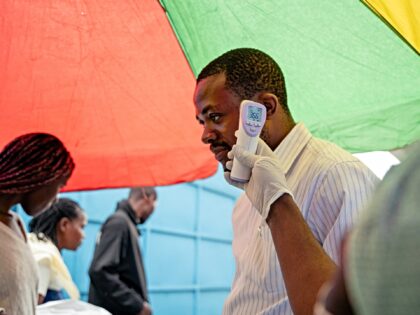
As the Ebola outbreak tightens its grip on multiple nations, governments are slamming borders shut faster than you can say “enhanced screening,” and the ripple effects are already reaching far beyond public-health circles. What looks like a straightforward containment measure quickly morphs into a live-fire demonstration of how fragile the right to travel becomes once officials decide an invisible threat justifies extraordinary controls. For the 2A community, the lesson is immediate: the same legal architecture that lets agencies quarantine people and cargo can be repurposed—under the banner of “national security”—to restrict the movement of lawfully owned firearms, ammunition components, or even the tools needed to maintain them. History shows that once emergency powers are normalized, they rarely shrink back to their original size; instead they metastasize into permanent bureaucratic habit.
The practical takeaway is that preparedness can no longer stop at stocking magazines and medical kits; it must include contingency plans for operating inside a suddenly closed system. Reloaders who rely on imported primers or specialty powders may find themselves cut off overnight, while competitive shooters whose travel schedules orbit international matches could discover that an airline’s last-minute “enhanced protocol” is indistinguishable from an outright ban. More broadly, the optics of an unchecked foreign pathogen give anti-Second-Amendment voices fresh talking points about “public safety,” inviting incremental measures—background-check expansions, ammo serialization, or “enhanced” permitting—that are sold as temporary but rarely sunset. In short, the Ebola scare is a reminder that rights exercised only in calm weather are rights easily rationed when the weather turns.
The deeper implication is strategic: the 2A community must treat disease-driven travel shocks as another vector in the ongoing information war. Framing personal preparedness as both a public-health asset and a constitutional safeguard undercuts the narrative that only government can keep people safe. At the same time, state-level nullification statutes, reciprocity agreements, and stockpiling incentives become not just prudent but politically defensible when framed as resilience against both biological and bureaucratic threats. The virus will eventually recede; the precedents set during its spread may not—unless gun owners treat every border closure as a dry run for the next attempt to disarm by inconvenience.


