

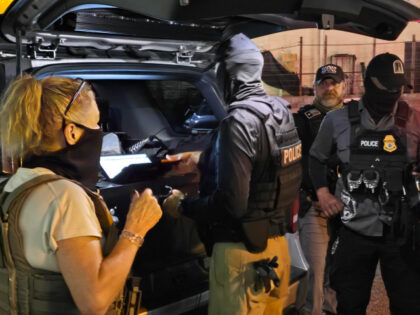
In a Houston suburb, ICE agents encountered the kind of resistance that underscores why the Second Amendment remains the ultimate backstop against government overreach. When an aggravated felon who entered the country illegally chose to barricade himself rather than submit to lawful removal, the standoff revealed the practical limits of relying solely on federal enforcement. Law-abiding citizens watching from their living rooms understand that if the state cannot—or will not—secure the border and remove criminal aliens, individuals retain the natural right to defend their families and property when that failure spills into their neighborhoods.
The episode also highlights a deeper policy failure: sanctuary-style non-cooperation and catch-and-release practices turn routine immigration enforcement into high-risk tactical operations. Every time an ICE team must treat a deportation as a barricade situation, resources are diverted from other threats and the public bears the downstream costs in both dollars and safety. For the 2A community, the takeaway is straightforward—border security and the right to keep and bear arms are not separate issues; they are two sides of the same coin. When the former collapses, the latter becomes the only reliable insurance policy against the chaos that follows.
Ultimately, this Houston incident is a microcosm of a national pattern where criminal illegal aliens exploit weak interior enforcement, and the response from Washington remains more rhetoric than results. Pro-2A Americans have long argued that an armed citizenry serves as a deterrent to both street-level predators and bureaucratic complacency. Until federal authorities restore operational control at the border and inside the country, the responsibility—and the right—to maintain order will continue to rest, as the Founders intended, with the people themselves.


