

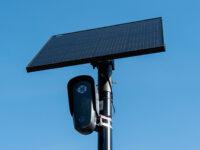
In an era where surveillance tech multiplies faster than the laws meant to restrain it, an Air Force engineer’s decision to physically dismantle automatic license-plate readers has struck a nerve far beyond the courtroom. Hundreds of donors have already rallied behind the defendant, signaling that many Americans view these cameras not as neutral traffic tools but as quiet extensions of a growing police-state apparatus—one that logs movements, builds behavioral profiles, and hands data to agencies that rarely need warrants. For Second Amendment advocates, the episode is a stark reminder that the same infrastructure used to track vehicles can just as easily flag gun purchases, map ranges, or monitor lawful carry; once the hardware exists, mission creep is almost inevitable.
The donations themselves reveal a widening cultural fracture: citizens increasingly willing to fund legal defenses against what they see as unconstitutional overreach rather than wait for slow-moving courts or legislatures. While critics will label the engineer’s actions simple vandalism, supporters argue that destroying sensors deployed without individualized suspicion is a form of civil disobedience aimed at preserving the practical anonymity once taken for granted in public spaces—an anonymity that underpins both the First and Second Amendments. If the state can record every trip to the gun store or the range without probable cause, the right to keep and bear arms risks becoming a logged, scored, and potentially restricted activity.
For the 2A community, the takeaway is strategic as well as philosophical: technological surveillance is now a core battlefront alongside legislation and litigation. Whether through encryption, open-source license-plate obfuscation tools, or continued pressure for warrants and data-retention limits, gun owners must treat ALPR networks as seriously as magazine bans or pistol braces. The engineer’s case may be an outlier in method, but the underlying anxiety it exposes—that liberty erodes one camera at a time—is shared by millions who refuse to let their movements become permanent government property.


