

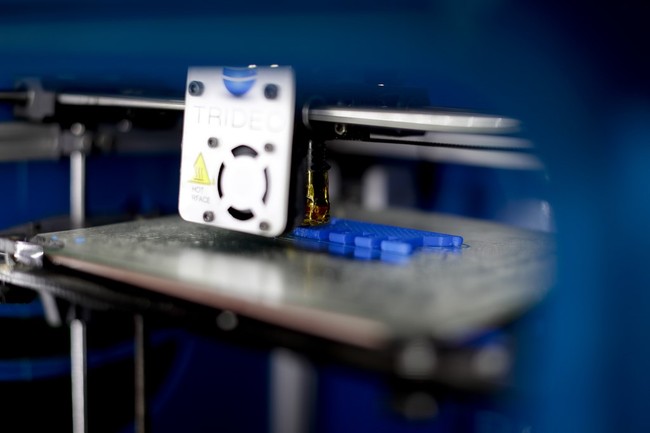
The e-reader case that slipped past 3D-printer “gun-blocking” software is more than a clever workaround—it’s a live demonstration of why hardware-level censorship will always lose to human ingenuity. When a simple plastic shell meant to hold a Kindle can be printed without tripping the filter, the entire premise of embedding political vetoes into manufacturing tools collapses under its own weight. The software’s creators assumed they could draw a bright line between “dangerous” and “innocent” geometries, yet the moment that line encounters everyday objects whose shapes overlap with frames, grips, or brackets, the system either blocks too much or lets the “wrong” file through. In practice, the only consistent outcome is friction for legitimate users who now must wonder whether their next RC-car chassis or prosthetic prototype will be silently deleted by an algorithm trained on incomplete threat models.
For the 2A community, the episode underscores a deeper asymmetry: legislators and tech firms can iterate on code overnight, but once a file leaves a printer it exists in the physical world beyond their reach. Every over-broad filter merely accelerates the diffusion of unrestricted slicing programs, offline firmware forks, and mesh libraries stripped of kill-switches. Rather than persuading people that an e-reader case is a gateway to crime, the software ends up spotlighting how unenforceable and counterproductive these controls truly are. The takeaway is straightforward—rights that depend on the goodwill of printers, slicers, and cloud dashboards are rights that can be revoked by a single software update, which is precisely why mechanical, not digital, copies of knowledge remain the durable safeguard.


