

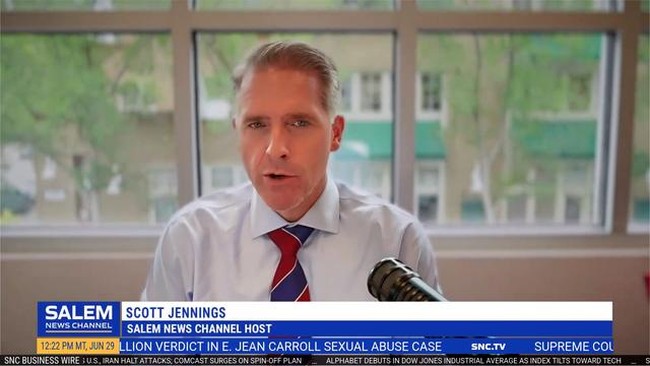
In a time when the very concept of self-government feels increasingly abstract, Daniel Bassali’s appearance with Scott Jennings serves as a timely reminder that the Declaration of Independence is not merely a historical document—it is the philosophical blueprint for every right we still claim today. The Declaration’s assertion that governments derive “their just powers from the consent of the governed” is the same principle that underpins the Second Amendment’s guarantee of an armed citizenry capable of resisting tyranny. When Bassali urges listeners to visit A250Declaration.com and pledge to read the text, he is effectively asking Americans to re-anchor themselves in the idea that rights are not gifts from Congress or the courts, but pre-existing endowments that government exists to protect—or else answer to an armed and informed people.
For the 2A community, this call to re-read the founding charter carries immediate tactical relevance. The Declaration’s litany of grievances against King George III—quartering troops, disarming colonists, rendering local militias subservient to standing armies—reads like a 1776 indictment of modern gun-control proposals that seek to federalize permitting, restrict ammunition, or create national registries. Each of those contemporary measures echoes the very abuses the Founders catalogued as justification for separation. By refreshing our collective memory of those grievances, Bassali’s message equips gun owners to argue from first principles rather than from shifting public-opinion polls: the right to keep and bear arms is not a policy preference; it is the practical enforcement mechanism for the consent principle itself.
The implications stretch beyond rhetoric. If a new generation of citizens actually reads the Declaration and recognizes that the Founders viewed an armed populace as the ultimate check on centralized power, support for infringements such as red-flag laws or assault-weapon bans may erode—not because of partisan talking points, but because those measures contradict the document’s core logic. In that sense, the pledge at A250Declaration.com is more than a civics exercise; it is quiet preparation for the legal and cultural battles still to come, ensuring that when the next restriction is proposed, the response will begin not with “the polls say,” but with “we hold these truths to be self-evident.”


